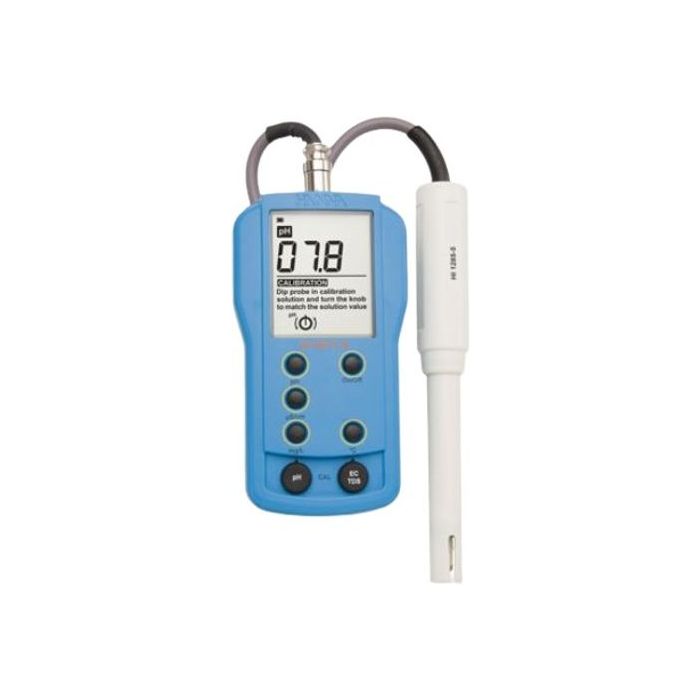
Hanna Portable Water Quality Meters

A portable meter is what you buy when a pocket tester is no longer enough. The electrode is separate and replaceable, it hangs on a cable so the instrument stays in your hand and out of the water, and the readings are logged rather than glanced at.

Hanna builds them from single parameter instruments up to eight parameter multiprobes on forty metres of cable. Ecotao supplies the range across South Africa from Cape Town, along with the electrodes, buffers and membranes they depend on.

  • pH & ORP
  • EC, TDS & salinity
  • Dissolved oxygen
  • Turbidity
  • Waterproof
  • Logging

Why a Portable Meter Rather Than a Tester

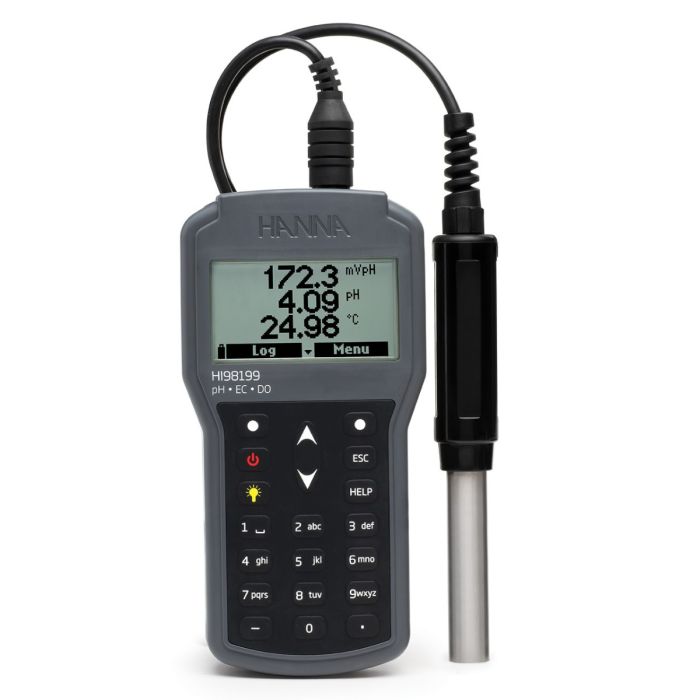
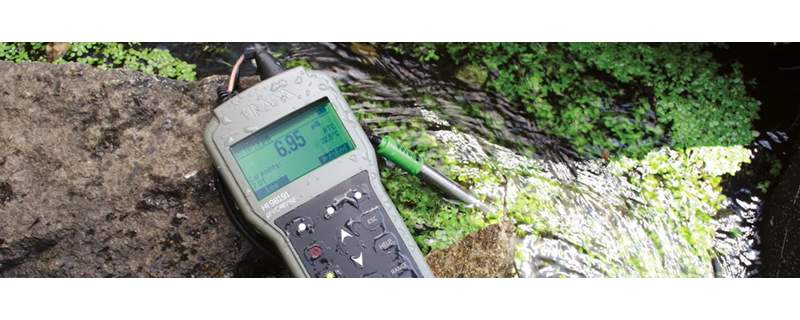
Hanna portable water quality meters with detachable electrodes Hanna portable meters for field and plant use

Three things separate a portable meter from a pocket tester, and all three matter more as the readings get more serious.

The electrode detaches. That means you can replace it when it ages rather than replacing the instrument, and you can choose a sensor suited to your sample. A flat tip for surfaces, a spear for semi solids, a rugged body for field work, a low maintenance gel electrode for sites without a technician.

The cable gives you reach. Measuring a reservoir, a borehole, a dam or a tank means getting the sensor to the water rather than the water to the sensor. Hanna supplies multiparameter probes on cables up to forty metres for exactly this.

The instrument logs. A tester shows you a number and forgets it. A portable meter stores readings with time and date, which is the difference between knowing what the water is doing now and being able to show what it did last month.

Up to 40 mprobe cable length
8 parametersfrom one multiprobe
Replaceableelectrodes and membranes
Loggingwith time and date stamps

The Models Worth Starting With

Ecotao stocks around a dozen Hanna portable meters. The ones below cover the range from a single workhorse to a full multiparameter probe, and are what South African customers ask for most.

Hanna HI9811-51 portable pH, EC, TDS and temperature meter with electrode
HI9811-51

Portable pH, EC, TDS and Temperature Meter

The workhorse of the range and the meter most sites end up owning. Four parameters, one electrode, and a build simple enough that it survives being carried around a farm or a plant for years.

  • pH, EC, TDS and temperature
  • Single replaceable electrode
  • Automatic temperature compensation
  • Field rugged housing
  • Calibration on pH and EC

Best for: farms, nurseries, small water schemes and general plant use.
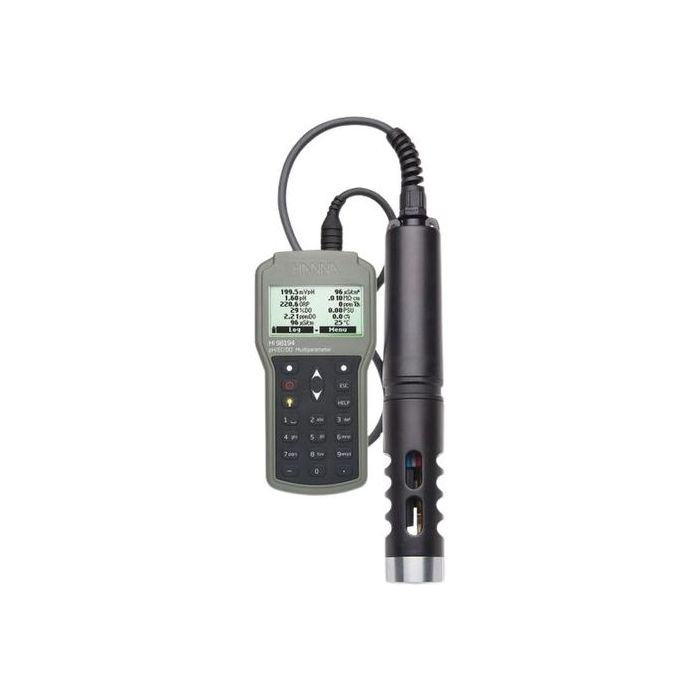
Hanna HI98194 multiparameter waterproof meter with probe on cable
HI98194

Multiparameter Waterproof Meter: pH, ORP, EC, TDS, Salinity, DO, Pressure and Temperature

The top of the portable range. One probe reads eight parameters at once, which removes the usual problem of taking four separate readings at four slightly different moments and places. Supplied on a ten metre cable, with forty metres available.

  • pH, ORP, EC, TDS and salinity
  • Dissolved oxygen, pressure and temperature
  • Waterproof to IP67
  • Ten metre probe cable as standard
  • Logging with time and date

Best for: dams, rivers, boreholes, estuaries and any profiling work.

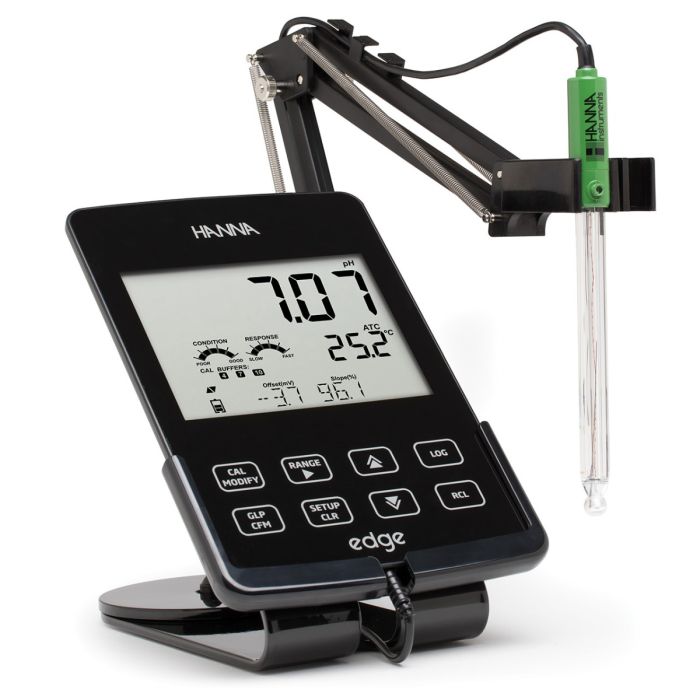
Hanna edge multiparameter pH meter in tablet format
edge pH

edge Multiparameter pH Meter

A flat tablet format meter that works on a bench, on a wall bracket or in the hand. The interface is deliberately simple, which matters when the person taking readings is not the person who bought the instrument.

  • pH and temperature
  • Tablet format, 12.7 mm thick
  • Bench, wall or handheld use
  • Large backlit display
  • USB logging

Best for: laboratories, training environments and sites with rotating staff.

Hanna edge dedicated dissolved oxygen meter kit with probe
edge DO

edge Dedicated Dissolved Oxygen Meter Kit

The same edge platform configured for dissolved oxygen, supplied as a kit. DO is the parameter that decides whether fish live, and it changes fast enough that a reading taken at the pond is worth far more than one taken later.

  • Dissolved oxygen and temperature
  • Supplied as a complete kit
  • Tablet format
  • Galvanic probe, replaceable membrane
  • USB logging

Best for: aquaculture, wastewater aeration and dam monitoring.

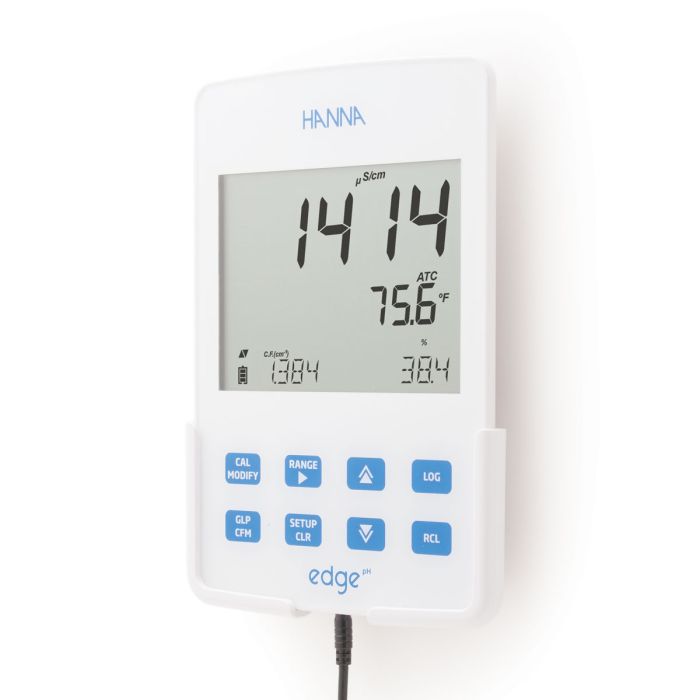
Hanna edge dedicated conductivity, TDS and salinity meter
edge EC

edge Dedicated Conductivity, TDS and Salinity Meter

The conductivity version of the edge. Conductivity is the quickest proxy for how much is dissolved in water, which makes it the first thing to check when something changes and you do not yet know what.

  • Conductivity, TDS and salinity
  • Tablet format
  • Bench, wall or handheld use
  • Automatic temperature compensation
  • USB logging

Best for: irrigation, process water, RO monitoring and salinity tracking.

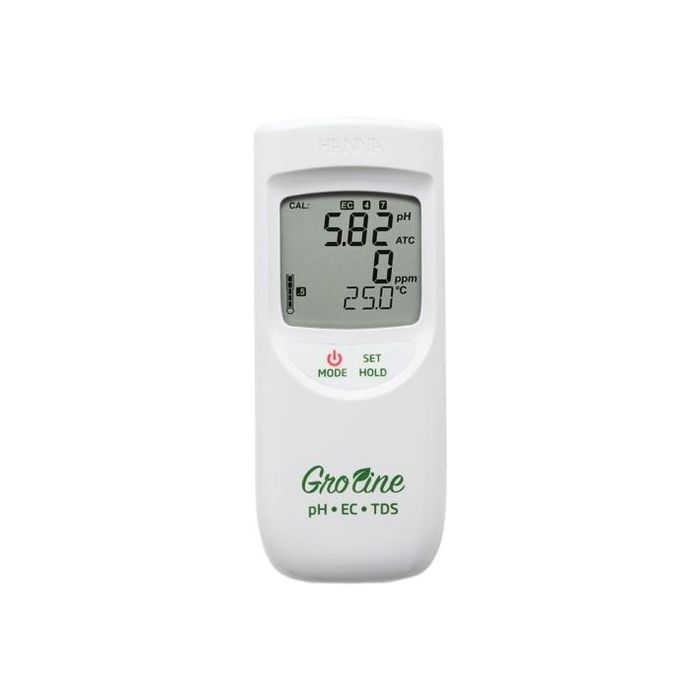
Hanna GroLine HI9814 waterproof hydroponics portable meter with electrode
HI9814

GroLine Hydroponics Waterproof pH, EC, TDS and Temperature Portable Meter

Built around growing rather than general water work. The ranges are scaled to nutrient solution rather than to drinking water, so the resolution sits where growers actually need it.

  • pH, EC, TDS and temperature
  • Ranges scaled for nutrient solution
  • Waterproof housing
  • Replaceable pH electrode
  • Quick calibration

Best for: hydroponics, fertigation and greenhouse production.

Hanna multiparameter portable pH, EC and dissolved oxygen waterproof meter with probe
pH/EC/DO

Multiparameter Portable pH, EC and DO Waterproof Meter

The three parameters that between them describe most water, in one waterproof instrument. A sensible middle point if the eight parameter probe is more than the job needs but a single parameter meter is not enough.

  • pH, EC and dissolved oxygen
  • Waterproof housing
  • Replaceable electrodes
  • Automatic temperature compensation
  • Field use

Best for: aquaculture, effluent monitoring and general field survey.

Hanna waterproof portable ORP meter supplied with electrode
ORP

Waterproof Portable ORP Meter and Electrode

ORP tells you how oxidising or reducing the water is, which is what actually governs whether disinfection is working. Pool and water treatment controllers run on ORP rather than on chlorine concentration for this reason.

  • ORP in millivolts
  • Supplied with electrode
  • Waterproof housing
  • Automatic temperature compensation
  • Field use

Best for: disinfection control, pools, water treatment and process monitoring.

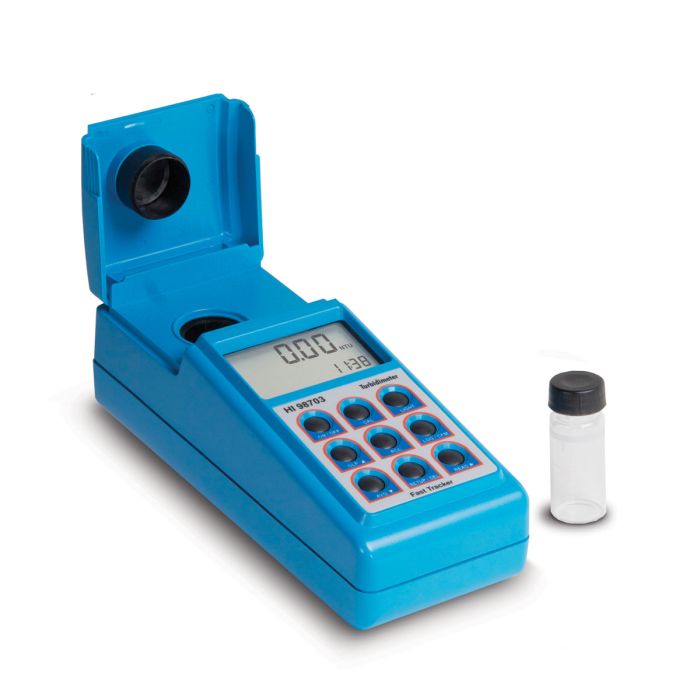
Hanna HI98703 EPA compliant portable turbidity meter with sample vials
HI98703

Turbidity Portable Meter, EPA Compliant

Turbidity is how cloudy the water is, and it is both a quality measure in its own right and a proxy for filtration performance. This one meets the EPA method, which matters if the number goes into a report.

  • Turbidity in NTU
  • EPA compliant method
  • Portable format
  • Supplied with calibration standards
  • Logging

Best for: drinking water, filtration monitoring and compliance reporting.

Matching the Meter to the Job

Parameters first, then reach, then whether the readings have to be kept.

Model Parameters Format Typical use
HI9811-51pH, EC, TDS, tempHandheldGeneral farm and plant
HI981948 parametersProbe on cableDams, rivers, profiling
edge pHpH, tempTabletLab and training
edge DODO, tempTabletAquaculture, aeration
edge ECEC, TDS, salinityTabletIrrigation, RO, process
GroLine HI9814pH, EC, TDS, tempHandheldHydroponics
pH/EC/DO meterpH, EC, DOHandheldField survey, effluent
ORP meterORPHandheldDisinfection control
HI98703TurbidityPortableDrinking water, filtration

Where Portable Meters Get Used

Wherever the water will not come to the laboratory.

🐟Aquaculture
🌱Agriculture
💧Hydroponics
🚰Drinking water
🏭Wastewater
🌊Rivers & dams
🏊Pools & spas
🔬Research
🔧Plant maintenance
🏨Lodges & estates

How to Choose

  1. List every parameter you will need, not just today's

    Adding a parameter later usually means a second instrument. A multiparameter meter bought once is almost always cheaper than two single parameter meters bought a year apart.

  2. Work out how far the sensor has to travel

    A handheld meter with a short electrode cannot reach into a borehole or down a dam profile. If you need depth, you need a probe on a cable, and the cable length is a decision you cannot change later.

  3. Decide whether readings have to be kept

    If anyone will ever ask what the water was doing last month, buy a logging meter. Reconstructing that from a notebook is not the same thing and will not satisfy an auditor.

  4. Match the electrode to the sample, not the meter

    The meter is the easy part. A standard pH bulb will not survive slurry, will clog in protein rich samples and will read slowly in low conductivity water. Tell us the sample and we will specify the electrode.

  5. Budget for electrodes as a running cost

    A pH electrode is a consumable with a working life measured in months to a couple of years depending on use. Treat it like a filter rather than like part of the instrument.

Electrodes, Membranes and Keeping a Portable Meter Honest

Nearly every portable meter that reads wrong is carrying a tired electrode. The electronics rarely fail. The sensor always does, eventually, and it does so gradually enough that nobody notices until the readings stop making sense.

For pH, store the electrode wet in storage solution, never dry and never in distilled water. Calibrate against fresh buffer on two points as a minimum. If a calibration will not hold after cleaning, the electrode has reached the end of its life rather than needing more calibration.

For dissolved oxygen, the membrane and electrolyte are consumables with a defined replacement interval. A DO meter that reads low and responds slowly almost always needs a membrane rather than a service.

Ecotao stocks replacement electrodes, membranes, electrolyte, buffers and storage solution for the Hanna portable range. Give us the model number and we will quote the correct parts rather than leaving you to decode part numbers.

Frequently Asked Questions

A pocket tester has the sensor built into the body as one sealed unit and is designed for quick spot checks. A portable meter has a separate electrode on a cable, so the sensor can be replaced when it ages and chosen to suit the sample, the cable gives you reach into tanks, boreholes and dams, and the instrument logs readings with time and date rather than simply displaying them. Choose a tester for speed and price. Choose a portable meter when readings have to be documented, when you need a specialist electrode, or when the sensor has to reach water you cannot bring to it.

Months to a couple of years, depending entirely on how it is used and stored. Clean water and careful storage at the long end, dirty or hot samples and dry storage at the short end. An electrode is a consumable rather than a permanent part of the instrument, and the clearest sign it is finished is a calibration that will not hold after a proper clean. Budget for replacement the way you would budget for filters.

For most users, yes, and there is a measurement argument for it beyond convenience. Taking pH, conductivity and dissolved oxygen with three instruments means three readings at three slightly different moments and slightly different depths, which is a problem in water that is stratified or changing. One probe reads them together at the same point and time. The trade-off is that a fault takes out all your parameters at once rather than one, so sites with critical monitoring often keep a single parameter backup.

If the meter leaves a bench, yes. Most portable meters are destroyed by water ingress rather than by wearing out, and it usually happens in a moment of carelessness near a tank rather than through sustained abuse. A waterproof rating also means the instrument can be rinsed clean, which matters in food, aquaculture and wastewater work where the alternative is a meter that is never properly cleaned.

pH tells you how acidic or alkaline the water is. ORP, oxidation reduction potential, tells you how strongly oxidising or reducing it is, measured in millivolts. For disinfection the distinction matters a great deal: chlorine concentration tells you how much disinfectant is present, while ORP tells you how effectively it is actually working, and the two can diverge sharply as pH changes. This is why automated pool and water treatment controllers dose on ORP rather than on a chlorine reading.

Yes, and these are what customers reorder rather than the instruments. We stock replacement pH electrodes, dissolved oxygen membranes and electrolyte, conductivity probes, buffers and storage solution for the Hanna portable range. Part numbers in this range are easy to get wrong because similar looking electrodes differ in junction type and body material, so tell us the meter model and the sample you are measuring and we will specify the right one.

Related Pages

Not sure which meter or electrode you need?

Tell us the parameters, the sample and how far the sensor has to reach. We will specify the meter, match the electrode to the sample and quote the consumables to go with it.