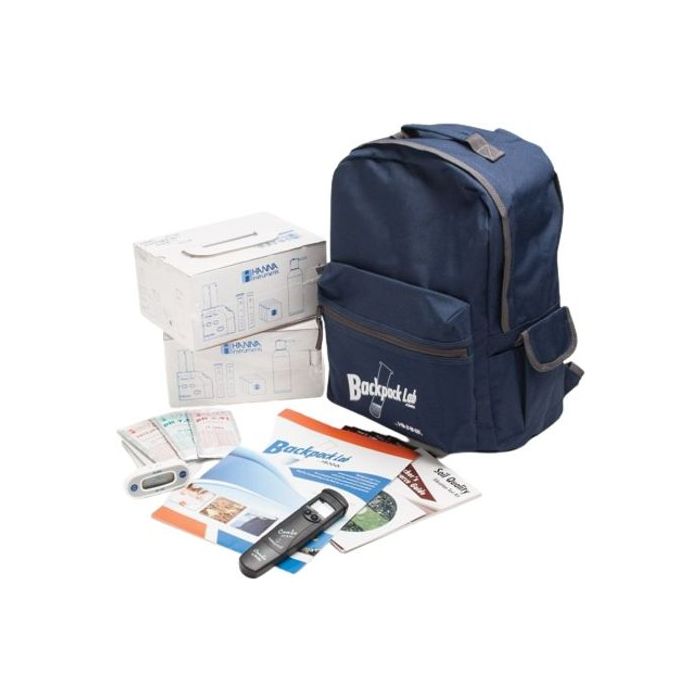
Hanna Chemical Test Kits

A chemical test kit needs no batteries, no calibration and no electrode. You add a reagent to a measured sample and read the result, either by matching a colour or by counting drops until the sample changes. Everything lives in one case that survives a bakkie.

Ecotao supplies the Hanna test kit range across South Africa from Cape Town, together with the replacement reagents each kit consumes.

  • Ammonia
  • Nitrite
  • Chlorine
  • Ozone
  • NPK soil
  • Education

When a Test Kit Beats an Instrument

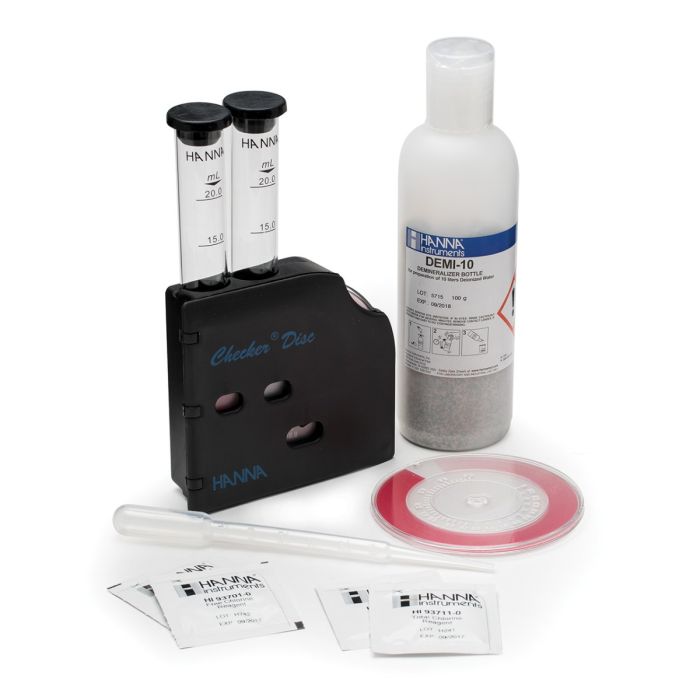
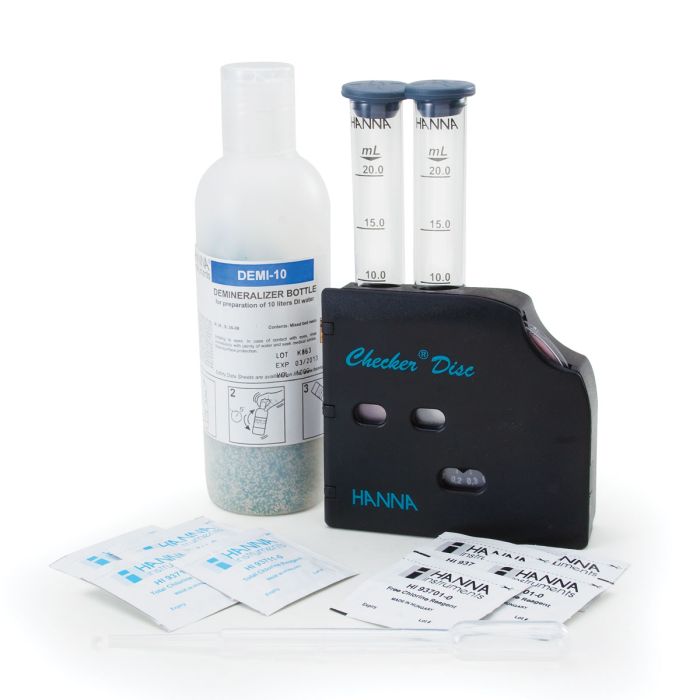
Hanna chemical test kits with reagents and comparison tubes Hanna chemical test kits for field and classroom use

There is a reflex to assume the electronic option is always better. For a lot of real work it is not, and the reasons are practical rather than nostalgic.

A test kit has nothing to calibrate and nothing to go flat. An electrode drifts, a battery dies and a photometer needs its reagents anyway. A titration kit sitting in a cupboard for a year works the moment you open it, provided the reagent is in date.

A test kit is cheap enough to have several. One per vehicle, one per site, one in the training room. Equipping five people with test kits costs less than equipping one with a meter, and for screening work five sets of results beat one.

The limit is resolution and operator dependence. A titration resolves to the size of one drop and a colour comparison to the gap between two printed patches, and two people will read that gap slightly differently. For screening, for teaching and for go or no-go decisions that is fine. When you need a number to a decimal place that anyone can reproduce, move to a Checker HC or a photometer.

No powernothing to charge or calibrate
Field readyeverything in one case
Low costper test and per kit
Refillablereplacement reagents stocked

The Kits We Supply

Ecotao stocks the Hanna test kits below. They sit across several categories in our store, from water quality through to soil and aquaculture, so this page gathers them in one place.

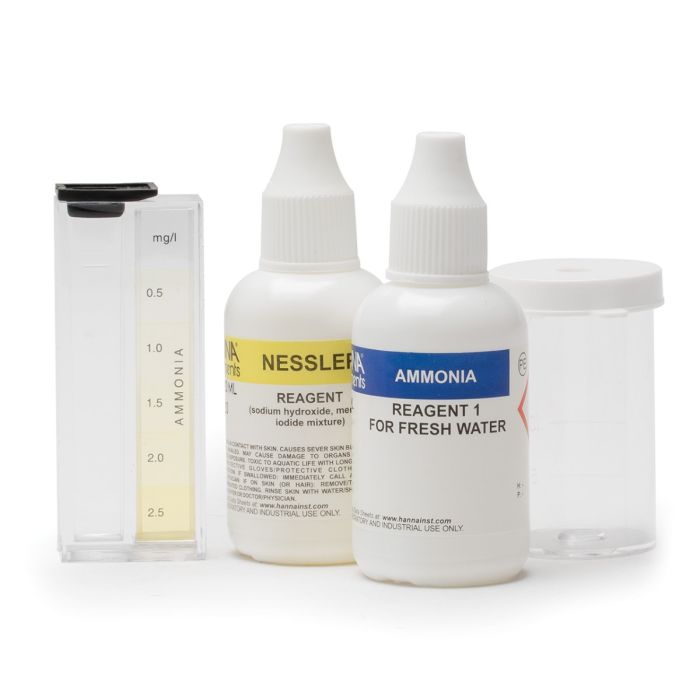
Hanna HI3824 ammonia chemical test kit for fresh water with reagents
HI3824

Ammonia Test Kit for Fresh Water

Ammonia is the parameter that kills fish fastest and the one most worth checking daily. This kit covers fresh water by colorimetric comparison, with enough tests per pack to run a sensible monitoring routine.

  • Ammonia in fresh water
  • Colour comparison method
  • Complete kit with reagents
  • Replacement reagents available
  • No instrument required

Best for: freshwater aquaculture, ponds, aquaria and tank monitoring.
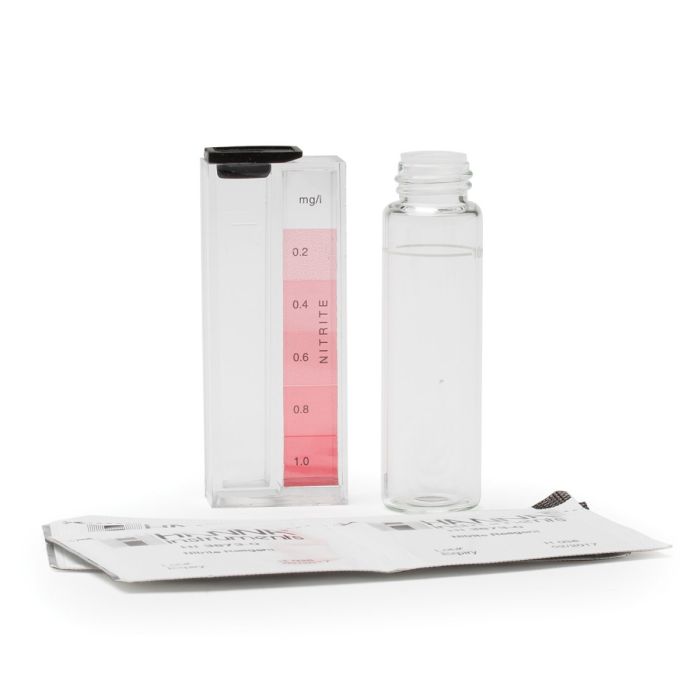
Hanna HI3873 nitrite chemical test kit with reagents and comparison tube
HI3873

Nitrite Chemical Test Kit

Nitrite is the middle step of the nitrogen cycle and the one that catches people out, because it spikes while a system is maturing or after a filter is disturbed. Cheap to test and expensive to ignore.

  • Nitrite by colour comparison
  • Complete kit with reagents
  • Replacement reagents available
  • Field portable
  • No instrument required

Best for: aquaculture, aquaria and new or recently disturbed filtration.

Hanna HI38020 free and total chlorine test kit covering low, medium and high ranges
HI38020

Free and Total Chlorine Test Kit: Low, Medium and High Range

Three ranges in one kit, which matters because chlorine concentrations vary enormously between a polished drinking supply and a shock dosed tank. Covers both free and total chlorine, so you can see how much disinfectant remains and how much has been used up.

  • Free and total chlorine
  • Low, medium and high ranges
  • Colour comparison method
  • Complete kit with reagents
  • Replacement reagents available

Best for: water treatment, reticulation, pools and tanks with variable dosing.

Hanna HI38017 free and total chlorine test kit for low and medium range
HI38017

Free and Total Chlorine Test Kit: Low and Medium Range

The same chemistry over the two ranges most sites actually use. If your chlorine residual lives in a predictable band, this is the cheaper and simpler choice.

  • Free and total chlorine
  • Low and medium ranges
  • Colour comparison method
  • Complete kit with reagents
  • Replacement reagents available

Best for: routine residual checks where concentrations stay within a known band.

HI38054

Water Ozone Test Kit

Ozone is increasingly used where chlorine is unwanted, in bottling, food processing and some aquaculture. It also decays quickly, which makes a test at the point of use considerably more meaningful than one taken later.

  • Ozone in water
  • Colour comparison method
  • Complete kit with reagents
  • Replacement reagents available
  • Field portable

Best for: bottling, food processing and ozone disinfection systems.

Hanna NPK soil chemical test kit for nitrogen, phosphorus and potassium
NPK Soil

NPK Soil Chemical Test Kit

Nitrogen, phosphorus and potassium are what fertiliser decisions are made on, and testing them yourself turns a guess into a measurement. Twenty five tests of each, which is a season of work on a small holding.

  • Nitrogen, phosphorus and potassium
  • 25 tests of each parameter
  • Colour comparison method
  • Replacement reagents available
  • No instrument required

Best for: small farms, nurseries, agronomy advisers and smallholdings.

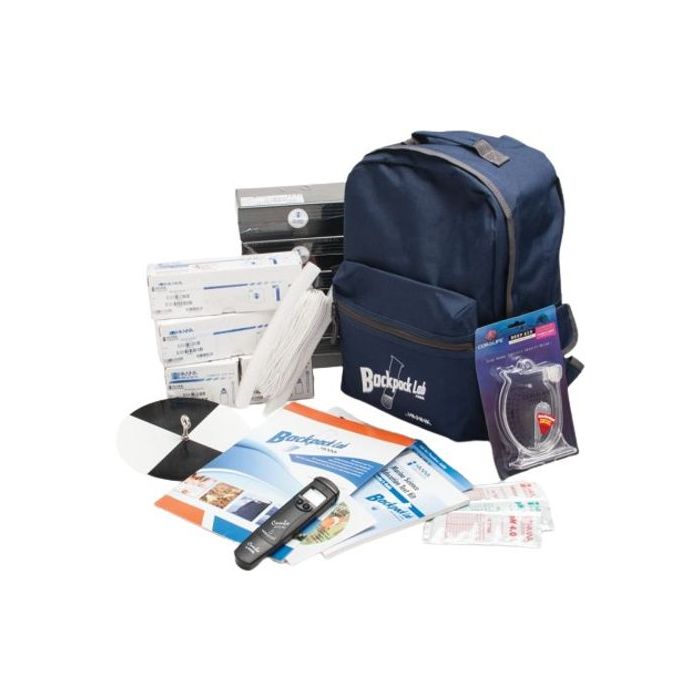
Hanna marine science educational test kit in its case with reagents and glassware
Marine Science

Marine Science Educational Test Kit

Built for teaching rather than production. Covers the parameters a marine science syllabus asks for, with enough tests that a class can each run their own rather than watching one demonstration.

  • Multiple marine parameters
  • Designed for classroom use
  • Complete kit with reagents
  • Replacement reagents available
  • No instrument required

Best for: schools, colleges, marine science courses and outreach programmes.

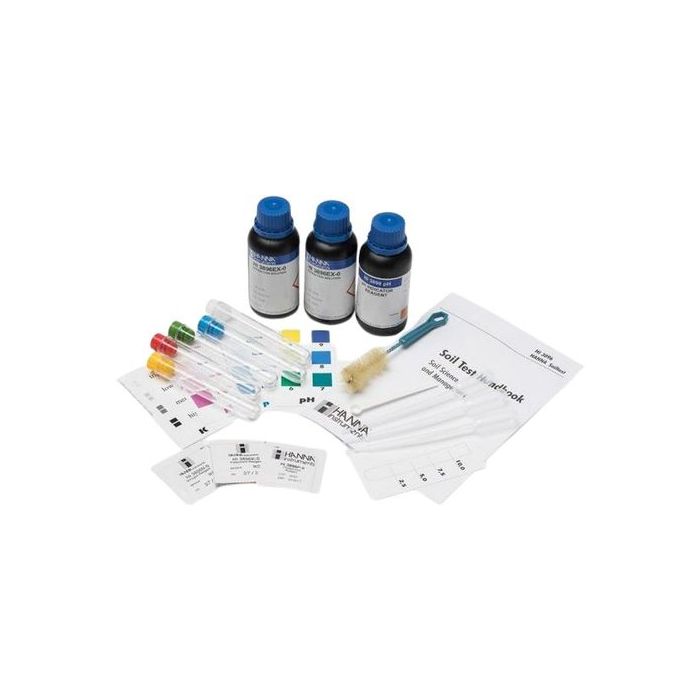
Hanna soil quality educational test kit in its case with reagents
Soil Quality

Soil Quality Test Kit

The soil equivalent for teaching and for growers who want a broader picture than NPK alone. Covers the chemistry that determines whether a soil will actually grow what you plant in it.

  • Multiple soil parameters
  • Suited to teaching and field use
  • Complete kit with reagents
  • Replacement reagents available
  • No instrument required

Best for: agricultural colleges, extension officers and growers assessing new ground.

Test Kit, Checker HC or Photometer

Three ways to measure the same chemistry, and the honest trade-offs between them.

Chemical test kit Checker HC Portable photometer
Reads the resultYour eyeLED and detectorLED and detector
ResultA band or rangeA number in mg/LA number in mg/L
PowerNoneBatteryBattery
CalibrationNoneCheck setOnboard CAL Check
Same answer from two peopleNot alwaysYesYes
Cost to equip a teamLowestModerateHighest
Suits reportingScreening onlyUsuallyYes

Where Test Kits Earn Their Keep

Anywhere power, calibration or budget make an instrument awkward.

🐟Aquaculture
🏫Schools & colleges
🌱Smallholdings
🚰Rural water
🏊Pools
🚚Mobile teams
🍾Bottling
🌊Marine science
🧰Backup to instruments
📋Screening surveys

How to Choose a Kit

  1. Check the range covers your water

    A low range chlorine kit is useless on a shock dosed tank and a high range kit cannot resolve a drinking water residual. If your concentrations move about, buy the multi range version rather than two kits.

  2. Count the tests, not just the price

    Kits are quoted as a unit but consumed per test. A kit with 25 tests used daily lasts a month. Work out your consumption before comparing two kits on price alone.

  3. Check the reagents are available separately

    A kit you cannot refill is a disposable. Every kit on this page has replacement reagents available, which makes the case and glassware a one off purchase.

  4. Think about who will use it

    Colour matching is operator dependent. If several people will run the test and the results need to agree, either train them on the same kit together or move to a Checker HC where the instrument does the reading.

  5. Keep one as a backup even if you own a meter

    When an electrode fails on a Friday, a test kit is the difference between a gap in your records and a plausible number. They cost little and do not degrade in a cupboard.

Reagents, Shelf Life and Getting Repeatable Results

Reagents are the running cost and the usual culprit when a kit stops making sense. They carry an expiry date, and the chemistry genuinely degrades, faster in heat and faster again once a bottle has been opened.

Store kits out of direct sun and out of a hot vehicle. A kit that lives on a dashboard will give you trouble within a season. If a result looks wrong, check the reagent date before you doubt the water.

For repeatable colour comparison, read the result in consistent light, ideally daylight rather than fluorescent, hold the tube against the white backing the kit provides, and have the same person read it where you can. Most variation between operators comes from lighting rather than eyesight.

Ecotao stocks replacement reagents for the Hanna kit range, including the NPK soil reagents in packs of 25 tests each. Tell us the kit and we will quote the refill rather than selling you another whole kit.

Frequently Asked Questions

For screening, teaching and go or no-go decisions, yes. A titration kit resolves to the size of one drop and a colour comparison to the gap between two printed patches, which is typically good enough to tell you whether ammonia is safe, rising or dangerous. What they are not is reproducible to a decimal place between different operators, because colour matching depends on the person and the light. If a number has to be defended, reported externally or trended finely over time, use a Checker HC or a photometer instead.

Check the expiry date on the pack, and treat it seriously rather than as a guideline. Reagent chemistry degrades over time, considerably faster in heat and faster again once a bottle is opened. A kit stored in a cool cupboard will usually see out its stated life. A kit living in a vehicle in a Cape Town summer will not. Out of date reagent typically reads low rather than failing outright, which is the dangerous failure mode because the result still looks plausible.

Free chlorine is the disinfectant still available to do work. Total chlorine is that plus the combined chlorine already bound to ammonia and organic matter, which has largely been used up. The gap between the two tells you how much demand the water is placing on your dosing. A high total with a low free reading means you are adding chlorine and the water is consuming it, which usually points at contamination or organic load rather than a dosing fault.

Not for compliance reporting. Compliance requires accredited laboratory analysis using prescribed methods, and a colour comparison kit does not qualify however carefully you use it. What these kits are genuinely good for is the operational monitoring between those laboratory tests, so you find a problem the day it starts rather than when the quarterly results arrive. Most well run small water schemes use both.

Usually yes, with some exceptions. Most Hanna kits target one parameter or one closely related pair, such as free and total chlorine together. The educational kits are the exception and deliberately cover a spread of parameters for teaching. If you need several parameters routinely and are buying several kits to get there, compare the total against a multiparameter photometer, which often works out cheaper once you reach three or four parameters.

Yes, and this is what most customers reorder. We stock replacement reagents for the Hanna kit range, including the NPK soil reagents in packs of 25 tests each. The case, glassware and comparator are a one off purchase and the reagents are the consumable. Tell us which kit you have and we will quote the correct refill.

Related Pages

Not sure which kit or range you need?

Tell us what you are testing, roughly what concentrations you expect and how many tests a month you will run. We will match the kit to the range and quote the replacement reagents.