
Wind Speed & Direction Sensors
Wind speed sensors (anemometers) and wind direction sensors (wind vanes) are field-mounted transmitters that convert mechanical wind force into a standard 4–20 mA signal for direct connection to PLCs, SCADA systems, data loggers, and building management systems — with no signal conditioning required. Ecotao supplies the IP65-rated FST201 and FST202 wind transmitters to civil engineering, agriculture, and industrial clients across South Africa.
FST Wind Transmitters — Available from Ecotao
The FST201 and FST202 are designed as a complementary pair. Deploy one for wind speed, the other for wind direction, or both together on the same 12–30 VDC supply and data acquisition system to form a complete wind monitoring station.
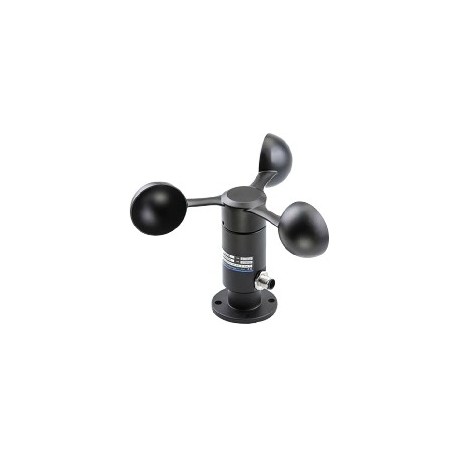
Three-cup Hall effect anemometer with stainless steel cups and a powder coated alloy body. Measures 0.5–50 m/s and outputs a linear 4–20 mA signal directly readable by any PLC or data logger. Built-in internal heater automatically activates below 0°C to prevent ice locking the cups.
- Measuring range: 0.5 – 50 m/s (1.8 – 180 km/h)
- Output: 4–20 mA, three-wire connection
- Power supply: 12–30 VDC
- IP65 — dust-tight, protected against water jets
- Internal heater activates below 0°C
- Automatic temperature compensation
- Stainless steel cups, powder coated alloy body
- M12 weatherproof connector
- EMI / RFI resistant; shock & overload protected
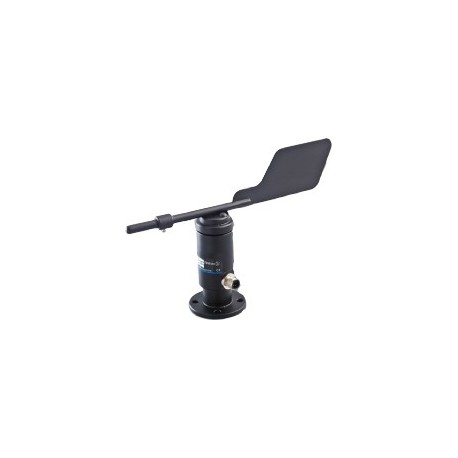
Mechanical wind vane transmitter with a powder coated alloy body and vane. Covers the full 0–360° compass with 22.5° resolution (16 compass points) and outputs a linear 4–20 mA signal. Shares the same supply voltage and output standard as the FST201 for easy parallel installation.
- Measuring range: 0 – 360° (full compass)
- Resolution: 22.5° (16 compass points)
- Output: 4–20 mA, three-wire connection
- Power supply: 12–30 VDC
- IP65 — dust-tight, protected against water jets
- Automatic temperature compensation
- Powder coated alloy body and vane
- M12 weatherproof connector
- EMI / RFI resistant; shock & overload protected
Specifications at a Glance
Side-by-side comparison of the FST201 and FST202 wind transmitters to help engineers and buyers confirm the right sensor for their application.
← Scroll to see full table →
| Specification | FST201 — Wind Speed | FST202 — Wind Direction |
|---|---|---|
| Measurement type | Wind speed (anemometer) | Wind direction (wind vane) |
| Sensor technology | Three-cup, Hall effect | Mechanical vane |
| Measuring range | 0.5 – 50 m/s (1.8 – 180 km/h) | 0 – 360° (full compass) |
| Resolution | Continuous (analogue output) | 22.5° (16 compass points) |
| Output signal | 4–20 mA, three-wire | 4–20 mA, three-wire |
| Power supply | 12–30 VDC | 12–30 VDC |
| Ingress protection | IP65 | IP65 |
| Body material | Stainless steel cups; powder coated alloy housing | Powder coated alloy body & vane |
| Connector | M12 weatherproof | M12 weatherproof |
| Internal heater | Yes — auto below 0°C | No |
| Temperature compensation | Automatic | Automatic |
| EMI / RFI resistance | Yes | Yes |
| Shock & overload protection | Yes | Yes |
| SKU | FST-201 | FST-202 |
How to Choose: Speed Only, Direction Only, or Both?
The right sensor — or combination — depends on what your application needs to measure and how the data will be used downstream. Use the guide below.
📈 Wind Speed Only — FST201
Choose the FST201 alone when you need to monitor wind intensity for a safety threshold or process interlock — for example, halting a tower crane when wind exceeds 12 m/s, or logging gust data at an agricultural weather station. A single analogue input channel on your PLC or data logger is all that is needed.
🧭 Wind Direction Only — FST202
Choose the FST202 alone when you need the prevailing wind compass bearing for dispersion modelling, smoke or chemical plume tracking, or site layout studies where wind speed is known from another source. The 4–20 mA output maps 0° (N) to 360° (N), giving 16 discrete compass points at 22.5° resolution.
🌀 Complete Station — FST201 + FST202
Deploy both sensors together when you need a full picture of wind conditions. Both share the same 12–30 VDC supply and connect to two analogue input channels on the same PLC or data logger without additional signal conditioning. This is the standard configuration for weather monitoring stations, EIAs, airport wind reporting, and occupational safety systems at exposed industrial sites.
❄️ Cold or High-Altitude Sites
For Highveld sites at 1,500–1,800 m elevation, or locations that experience sub-zero winter nights, the FST201's internal heater is essential — it prevents ice from seizing the rotating cups, which would otherwise cause the sensor to hold at 4 mA and trigger false no-wind readings. The FST202 vane should be mounted with sufficient clearance for ice formation on the vane arm.
Applications in South Africa
4–20 mA wind transmitters are the industrial standard choice for any installation that feeds live wind data into a PLC, SCADA system, or data logger.
Construction Site Safety
Tower cranes and aerial work platforms must cease operations above manufacturer wind limits — typically 12–15 m/s. The FST201 delivers a direct 4–20 mA wind speed signal to the crane safety PLC, enabling automatic shutdown before the threshold is reached and providing a tamper-proof audit trail for OHS compliance.
Agriculture & Irrigation
Wind strongly affects spray drift during pesticide and fertiliser application, and high winds can damage greenhouse structures. The FST201 and FST202 mounted on field mast poles give real-time wind data to guide spraying decisions, trigger automated alerts, and protect expensive crop infrastructure.
Weather Monitoring Stations
Both sensors integrate directly into automated weather stations and IoT gateways. The 4–20 mA output connects to any weather station data logger alongside temperature, humidity, pressure, and rainfall sensors on the same analogue input board — no protocol conversion required.
Environmental & Industrial Monitoring
Mines, refineries, and chemical plants must track wind conditions to predict airborne emission and fugitive dust dispersion. The FST202 direction sensor identifies which way a plume will travel; the FST201 speed sensor determines its dilution rate — together they supply the minimum dataset required for South African air quality permit compliance.
Airfields & Helipads
Remote private airfields and hospital helipads require continuous wind data for pilot decision-making. The FST201 and FST202 feed directly into display units, data loggers, or SCADA dashboards without protocol conversion, providing certified-grade accuracy in compact, low-maintenance housings.
Renewable Energy & Solar Farms
Wind resource assessments and long-term structural load monitoring at solar farms both require reliable outdoor wind data. The IP65 rating and corrosion resistant housings make FST sensors suitable for permanent installation across South Africa's climate zones — from the windswept Western Cape coast to the dry Northern Cape interior.
Frequently Asked Questions
Technical questions about wind speed and direction sensors, answered for engineers, system integrators, and procurement teams.
What is the difference between a wind speed sensor and a wind direction sensor?
A wind speed sensor (anemometer) measures how fast the wind is blowing, expressed in m/s or km/h. A wind direction sensor (wind vane) measures which compass direction the wind is coming from, expressed in degrees (0–360°). The FST201 is a three-cup anemometer: as the cups rotate, a Hall effect sensor inside the housing generates pulses that are converted to a 4–20 mA signal proportional to wind speed. The FST202 is a mechanical vane: as it rotates into the wind, an internal resistive element produces a 4–20 mA signal proportional to the compass angle. Most monitoring installations use both sensors together.
How does a 4–20 mA wind sensor connect to a PLC or data logger?
Both the FST201 and FST202 use an industry-standard three-wire 4–20 mA current loop. Two wires carry the 12–30 VDC power supply; the third carries the signal current. Your PLC or data logger reads the current on its analogue input channel: 4 mA = minimum reading (0.5 m/s or 0°), 20 mA = maximum reading (50 m/s or 360°). No external signal conditioner, transmitter, or protocol converter is needed — wire the three cores directly to the analogue input terminal block. Both sensors use a standard M12 four-pin weatherproof connector; any compatible M12 male cable can be used for field installation.
What does IP65 mean for a wind sensor, and is it adequate for South African conditions?
IP65 per IEC 60529 means the enclosure is fully dust-tight (digit 6 — no dust can enter) and protected against water jets from any direction (digit 5). For South African outdoor installations — including the Western Cape's coastal salt spray, the Highveld's intense summer thunderstorms, and the Karoo's severe dust conditions — IP65 is the correct and sufficient protection class for a mast-mounted wind sensor. Submerged or high-pressure wash-down environments would require IP67 or IP68, but those scenarios do not arise for wind sensors mounted on poles or rooftops.
What is the measuring range of the FST201 wind speed transmitter?
The FST201 measures 0.5 to 50 m/s (1.8 to 180 km/h). On the Beaufort scale, this spans from a light breeze (Beaufort 2, ~1.6 m/s) to conditions beyond a violent storm (Beaufort 11, ~30–32 m/s). South Africa's structural loading code SANS 10160-3 specifies peak gust design speeds of approximately 36–48 m/s in coastal Terrain Category 2 — the FST201's 50 m/s ceiling comfortably covers structural monitoring and safety shutdown requirements across all local exposure categories.
Can the FST201 and FST202 be used together as a complete wind monitoring station?
Yes — this is the recommended configuration. Both sensors share the same 12–30 VDC supply and output independent 4–20 mA signals, so they wire to two separate analogue input channels on the same PLC or data logger. No additional signal isolators, power supplies, or protocol converters are needed. The result is a compact, two-sensor station that delivers wind speed and direction in real time — the minimum dataset required by most South African site safety, meteorological, and environmental monitoring standards.
Do FST wind sensors work in freezing or sub-zero conditions?
Yes. The FST201 includes an internal heater that activates automatically when ambient temperature drops below 0°C, preventing ice from forming on the rotating cups and causing false-zero readings. Both the FST201 and FST202 also incorporate automatic temperature compensation to maintain measurement accuracy across a wide ambient temperature range. For South African Highveld sites at 1,500–1,800 m elevation — where winter nights regularly drop below 0°C — the FST201's built-in heater provides a significant operational advantage over unheated anemometers.
Need Wind Speed or Direction Sensors in South Africa?
Contact Ecotao for current availability, technical advice, and pricing on FST wind transmitters. Our Cape Town team supports engineers and system integrators across South Africa from initial enquiry through to installation and commissioning.