
Civil Engineering · Laboratory & Site
Material Testing Equipment
Material testing equipment is the laboratory and field apparatus used to measure the engineering properties of construction materials, including soil, rock and aggregate, cement and concrete, bitumen and asphalt, and reinforcing steel. It proves that a material meets its specification before it is used and that the finished work meets the design after it is built.
Ecotao supplies aggregate, asphalt, concrete, cement, soil and general laboratory test equipment from a selection of global brands to road, geotechnical, concrete and university laboratories across South Africa and neighbouring countries.
- Soil & CBR
- Cement & concrete
- Asphalt & bitumen
- Rock & aggregate
- Compression & universal testers
- SANS 3001 · TMH1 · ASTM · EN
- What is material testing?
- Equipment categories
- Tests by project stage
- Standards at a glance
- How to choose
- South Africa
- FAQ
- Contact
What is material testing in civil engineering?
Material testing is the set of standardised laboratory and field tests that measure how construction materials behave under load, water, heat and wear. Every road, bridge, building and dam is designed around assumed material properties, such as a concrete strength, a soil bearing capacity or an asphalt stability. Testing is how engineers confirm those assumptions are true for the material actually delivered to site.
Tests fall into three broad groups. Classification tests (grading, plasticity, density) describe what a material is. Performance tests (compressive strength, CBR, Marshall stability, abrasion) measure how it will behave in service. Compliance tests (field density, cores, rebound hammer, cover meters) check the finished work against the specification.
← Scroll to see full table →
| Material | Key properties measured | Typical tests |
|---|---|---|
| Soil & gravel | Grading, plasticity, compaction, bearing, shear strength, settlement, permeability | Sieve analysis, Atterberg limits, Proctor / Mod AASHTO, CBR, triaxial, oedometer |
| Rock & aggregate | Grading, cleanliness, strength, abrasion resistance, skid resistance | Sieve analysis, sand equivalent, point load, Los Angeles, Micro-Deval, pendulum friction |
| Cement & concrete | Workability, air content, compressive and flexural strength, stiffness, permeability, in-situ quality | Slump, air meter, cube crushing, mortar prisms, elastic modulus, cores, rebound hammer |
| Bitumen & asphalt | Binder consistency and ageing, mix stability, voids, binder content, compacted density | Penetration, softening point, RTFOT, Marshall, gyratory, Rice density, ignition furnace |
| Steel | Yield and tensile strength, elongation, bend performance | Tension, bend and re-bend tests on a universal testing machine |
Material testing equipment categories
Each category below links to a dedicated page with full product descriptions, specifications, comparison tables and selection guidance. Use them to equip a new laboratory, expand into a new material, or replace individual instruments.
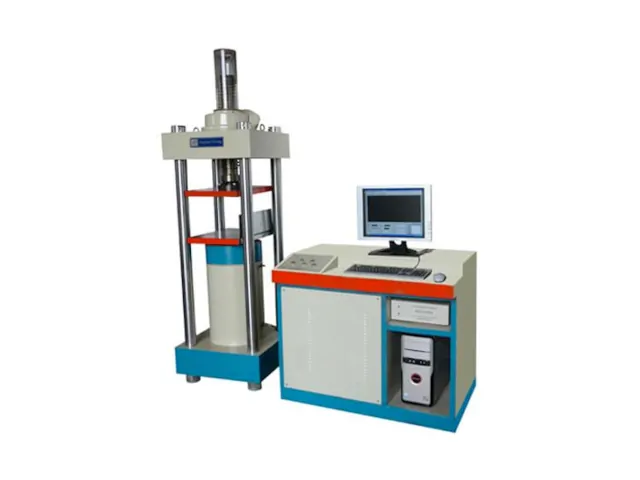
Material Testing Machines
Hydraulic load frames that crush, pull and bend specimens to find their strength. Compression testing machines break concrete cubes and cylinders to prove a mix reached its specified grade. Universal testing machines pull reinforcing bar and steel in tension and also test it in compression, bending and shear. Cement flexural and compression testers break 40 × 40 × 160 mm mortar prisms to grade cement. Capacities run from 100 kN to 3000 kN, in manual, digital-display and fully automatic servo-controlled versions.
Includes
Methods: SANS 5863, SANS 5864, SANS 6253, SANS 50196-1, SANS 920
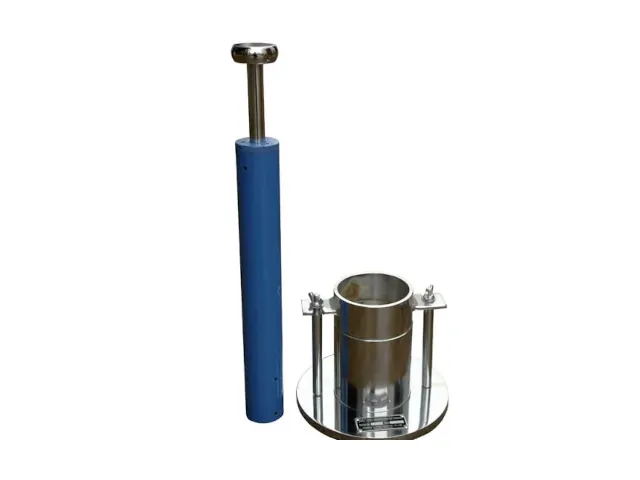
Soil & Civil Engineering Apparatus
Laboratory and field apparatus that describes a soil and predicts how it will behave beneath a road, foundation, embankment or dam. Sieves and Atterberg limit devices classify the soil. Proctor and Mod AASHTO compactors set the target density. Shear, triaxial and consolidation equipment measures the strength and settlement that foundations and slopes are designed on. On site, sand replacement and sand cone sets, plate load tests and rapid moisture testers prove that earthworks were compacted to specification.
Includes
Methods: SANS 3001 series, TMH1, ASTM and BS soil methods
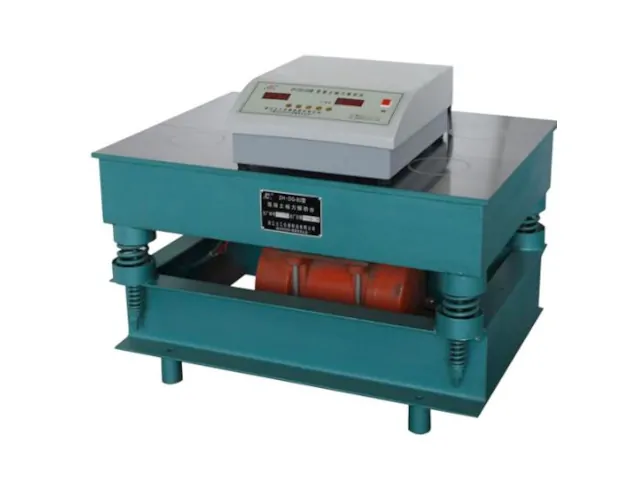
Cement & Concrete Testing
Equipment for every stage of concrete quality control, from the truck to the finished structure. Slump cones, air meters and flow tables check fresh concrete and mortar before it is placed. Cube moulds, vibrating tables and curing cabinets produce test specimens that represent the pour. Core drills, cutting and grinding machines prepare in-situ samples. Rebound hammers, rebar locators and crack width meters assess existing structures without damaging them.
Includes
Methods: SANS 5862-1, SANS 6252, SANS 5861-3, SANS 5865, EN 12390, ASTM C42
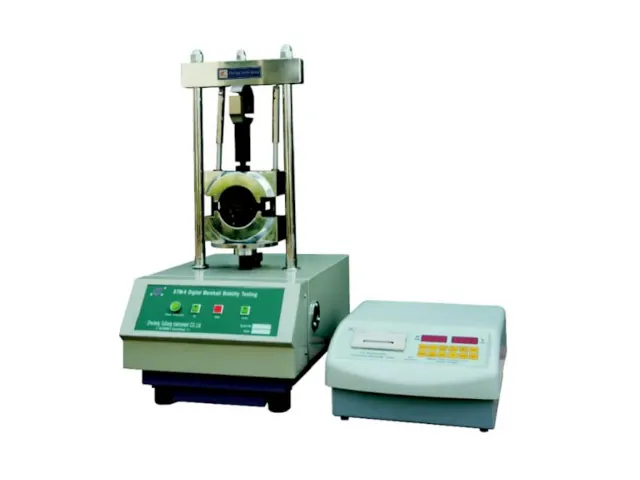
Asphalt Mixture & Bitumen Testing
Equipment to design a hot-mix asphalt, control it at the plant and confirm the laid layer. Binder testers (penetration, softening point, ductility, rolling thin film oven, flash point and viscosity) grade the bitumen and show how it ages. Marshall and gyratory compactors, a stability tester and a maximum theoretical density meter produce and assess the mix design. An ignition furnace or centrifuge extractor checks binder content in production. A non-nuclear density gauge checks compaction on the road without a radioactive source.
Includes
Methods: ASTM D6307 / AASHTO T 308, ASTM D2172 and related binder and mix methods
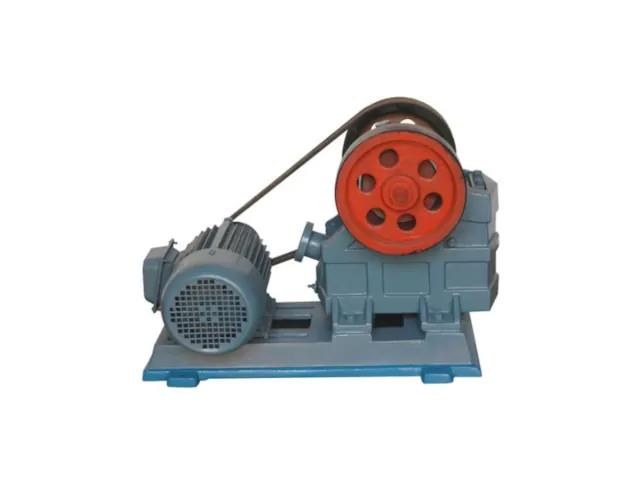
Rock & Aggregate Testing
Crushed stone, sand and gravel make up most of the volume of concrete, asphalt and road base, so their quality controls the quality of the whole layer. Jaw crushers and riffle samplers prepare a representative sample. Test sieves and sieve shakers check grading against the specification envelope. A sand equivalent shaker measures harmful clay fines. Los Angeles and Micro-Deval machines and a point load tester measure strength and durability, and a pendulum friction tester measures surface skid resistance.
Includes
Methods: SANS 3001 aggregate methods, ASTM and EN equivalents
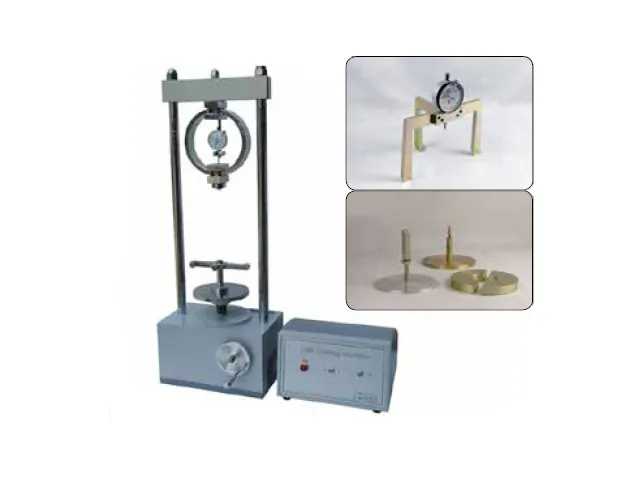
CBR Laboratory Equipment
A complete station for the California Bearing Ratio test, the standard South African measure of how well a compacted soil or gravel resists penetration. It is the basis of TRH14 material classification and pavement layer design. The range covers the 152.4 mm CBR mould with spacer discs and surcharge weights, a swell tripod and plate for the four-day soak, a motorised CBR load frame with a 50 kN proving ring and dial gauges, and a hydraulic extruder. A Dynamic Cone Penetrometer is also available for checking layer strength in situ.
Includes
Methods: SANS 3001-GR40, TMH1 Method A8, ASTM D1883, BS 1377-4
Which material tests are needed at each project stage?
Most construction projects test materials at four points. Knowing which stage you serve tells you which equipment your laboratory needs first.
← Scroll to see full table →
| Project stage | Question being answered | Typical tests | Equipment category |
|---|---|---|---|
| Investigation & source approval | Is this borrow pit, quarry or soil suitable? | Grading, Atterberg limits, CBR, abrasion, shear, consolidation | Soil, CBR, Rock & aggregate |
| Mix design | What proportions meet the specified strength or stability? | Trial cubes, mortar prisms, Marshall or gyratory designs, Rice density | Concrete, Asphalt, Testing machines |
| Production control | Is today's material the same as the approved design? | Slump, air content, sieve analysis, binder content, cube crushing | Concrete, Asphalt, Aggregate, Testing machines |
| Acceptance & in-situ checks | Was the layer or structure built to specification? | Field density, moisture, DCP, cores, rebound hammer, cover meter, non-nuclear density | Soil, CBR, Concrete, Asphalt |
Material testing standards at a glance
Your test method sets the specimen size, loading rate and apparatus dimensions, so confirm it before ordering. These are the methods most often referenced by South African laboratories, with international equivalents.
← Scroll to see full table →
| Test | Material | South African method | International methods | Ecotao category |
|---|---|---|---|---|
| Compressive strength (cubes) | Hardened concrete | SANS 5863 | EN 12390-3 | Testing machines |
| Slump | Fresh concrete | SANS 5862-1 | EN 12350-2, ASTM C143 | Concrete |
| Air content | Fresh concrete | SANS 6252 | EN 12350-7, ASTM C231 | Concrete |
| Cement strength (mortar prisms) | Cement | SANS 50196-1 | EN 196-1 | Testing machines |
| Drilled cores | In-situ concrete | SANS 5865 | EN 12504-1, ASTM C42 | Concrete |
| Reinforcing steel tensile properties | Steel | SANS 920 | ISO 6892-1 | Testing machines |
| Maximum dry density & OMC | Soil & gravel | SANS 3001-GR30 | ASTM D1557, AASHTO T 180 | Soil |
| California Bearing Ratio | Soil & gravel | SANS 3001-GR40 (formerly TMH1 A8) | ASTM D1883, AASHTO T 193, BS 1377-4 | CBR |
| Binder content by ignition | Asphalt | Per project specification | ASTM D6307, AASHTO T 308 | Asphalt |
| Binder content by extraction | Asphalt | Per project specification | ASTM D2172 | Asphalt |
Standards are revised from time to time. Always work to the edition named in your contract or accreditation scope.
How to choose material testing equipment
Use these decision points when setting up or expanding a materials laboratory.
- Start with your test methods. List the SANS, TMH1, ASTM or EN methods in your contracts or accreditation scope. The method fixes mould sizes, rammer masses, loading rates and tolerances, so it determines exactly which apparatus is acceptable.
- Size by throughput. Count samples per week, not tests. A soils lab running CBR at three compaction efforts needs moulds in multiples of three, and a ready-mix plant crushing cubes at 7 and 28 days needs moulds and curing space for every pour in that window.
- Match machine capacity to the strongest specimen. Multiply the highest expected strength by the specimen area and add a margin. A 100 MPa result on a 150 mm cube needs about 2 250 kN, so high-strength concrete calls for a 3000 kN frame.
- Choose manual, digital or automatic. Manual and digital-display machines suit low volumes and tight budgets. Fully automatic servo-controlled machines hold the loading rate the method requires without operator input, which improves repeatability for accredited labs.
- Check power and space. Many motorised machines need a 380 V three-phase supply, and compression frames need a level, reinforced floor. Confirm both before delivery.
- Plan for calibration. Load frames, proving rings, balances and dial gauges need periodic calibration for accredited work. Build the downtime into your schedule or keep spares of critical items.
Material testing in South Africa
South African road materials are classified under TRH14 and specified through the COLTO standard specifications for road and bridge works. They are tested to the SANS 3001 series of methods, which is progressively replacing the older TMH1 standard methods. Because many contracts still name TMH1, most road laboratories keep apparatus that satisfies both. Concrete and cement work follows SANS methods aligned with EN standards, such as SANS 5863 for cube strength and SANS 50196-1 for cement.
Practical points for southern African labs:
- Three-phase power: most compression machines and the CTM-01 CBR machine are specified for 380 V three-phase. Some models offer a 220 V option, and the OBRK-2000 runs on 220 V.
- Soaked strength: CBR specimens are soaked because saturated subgrades control pavement design in both the winter-rainfall Western Cape and summer-rainfall regions.
- Field and lab together: pair laboratory CBR and compaction testing with field density and DCP testing to close the loop between design and construction.
- Delivery: supplied from Cape Town throughout South Africa and to Namibia, Botswana, Zimbabwe, Mozambique, Lesotho and Eswatini.
Material testing equipment: frequently asked questions
What is material testing in civil engineering?
Material testing is the set of standardised laboratory and field tests that measure the engineering properties of construction materials, such as the strength of concrete, the compaction and bearing capacity of soil, the grading and durability of aggregate, and the binder content and stability of asphalt. The results show whether a material meets its specification before it is used, and whether the finished work meets the design once it has been built.
What equipment does a materials testing laboratory need?
It depends on the materials the lab tests. A soils lab needs sieves, Atterberg limit apparatus, compaction moulds and rammers, and CBR equipment. A concrete lab needs slump cones, cube moulds, a vibrating table, curing tanks or cabinets and a compression testing machine. An asphalt lab needs bitumen binder testers, a Marshall or gyratory compactor, a stability tester and a binder content furnace or extractor. An aggregate lab needs sieves and shakers, a sample splitter and abrasion machines. Most labs also share ovens, balances and an extruder.
Which standards are used for material testing in South Africa?
Road materials are tested to the SANS 3001 series, which is progressively replacing the older TMH1 methods, and classified under TRH14 and the COLTO standard specifications. Concrete is tested to SANS methods such as SANS 5862-1 for slump and SANS 5863 for compressive strength, and cement to SANS 50196-1 (EN 196-1). Many laboratories also work to ASTM, AASHTO, BS and EN methods for export or international projects.
What is the difference between a compression testing machine and a universal testing machine?
A compression testing machine only pushes, so it is built to crush concrete cubes, cylinders and blocks at high loads. A universal testing machine can pull as well as push, so it tests steel reinforcing bar and other materials in tension, compression, bending and shear. Concrete labs usually need a compression machine; labs that test reinforcing steel need a universal machine.
How do I choose the right capacity for a concrete compression machine?
Multiply the highest strength you expect to test by the loaded area of the specimen, then add a safety margin. A 150 mm cube has an area of 22 500 mm², so a 100 MPa cube needs about 2 250 kN. Machines of 2000 kN suit most structural concrete, while 3000 kN covers high-strength mixes. Check the loading rate and specimen size your test method requires as well.
What is the CBR test used for?
The California Bearing Ratio test measures how well a compacted soil or gravel resists penetration compared with a standard crushed stone. In South Africa it is tested to SANS 3001-GR40 and used to classify road materials under TRH14 and to design pavement layers.
Do I need a three-phase power supply for material testing machines?
Many motorised and automatic machines, including most compression testing machines and the CTM-01 CBR machine, are specified for a 380 V three-phase supply. Some models have a 220 V option or run on single-phase power. Check the specification of each machine against your laboratory's supply before ordering.
Can Ecotao supply a complete laboratory rather than single items?
Yes. Ecotao can quote individual instruments or a matched set of equipment for a new or expanding soils, concrete, asphalt or aggregate laboratory. Send the tests and standards you work to and your expected sample throughput to sales@ecotao.co.za.
Does Ecotao deliver material testing equipment outside South Africa?
Yes. Ecotao supplies material testing equipment from Cape Town throughout South Africa and to Namibia, Botswana, Zimbabwe, Mozambique, Lesotho and Eswatini.
Equipping a materials laboratory?
Send us the materials you test, the methods you work to and your weekly sample count. We'll quote individual instruments or a matched set for soils, concrete, asphalt or aggregate testing, delivered anywhere in South Africa or neighbouring countries.
- Head Office+27 21 911 5835
- Zak086 142 8716
- Zaid082 390 3989
- Emailsales@ecotao.co.za
aqua@ecotao.co.za