
Ozone Sensors & Instruments
Ozone sensors, monitors, controllers and analysers for measuring ozone gas in air and dissolved ozone in water, plus a VOC gas sensor for solvent vapours. Instruments supplied from our Cape Town base across South Africa and neighbouring countries.
What is an ozone sensor? An ozone sensor detects ozone (O3), a strong oxidising gas used to disinfect water, air and food, and reports its concentration in parts per million (ppm) or parts per billion (ppb) in air, or in mg/L when dissolved in water. Because ozone is used at levels well above what is safe to breathe, ozone instruments do two jobs: they protect people from exposure, and they confirm that an ozone process is working at the right dose.
Ozone instrument categories
Start with what you need to measure. Each category page has full specifications, set-up advice and a buying guide.
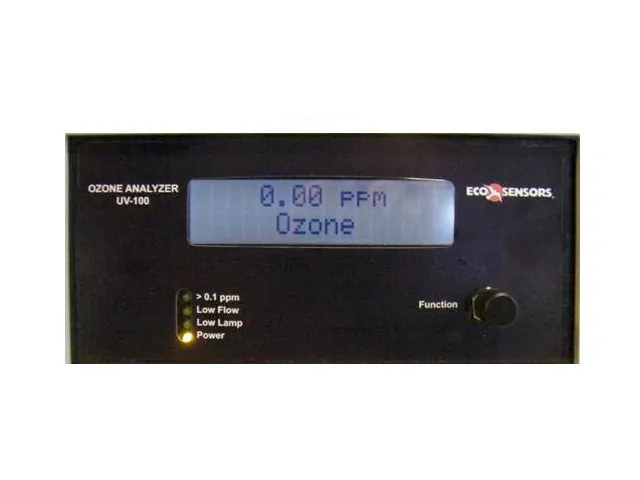 Ozone in air analyserUV-100 UV photometric analyser for accurate, traceable ozone readings from 0.01 to 999 ppm.
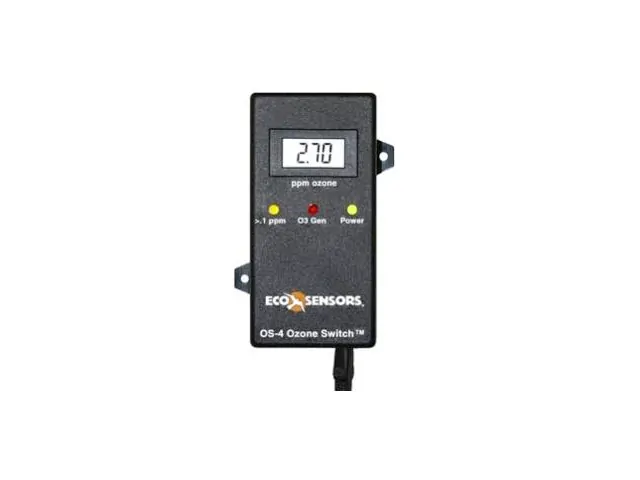 Ozone monitors & controllersFixed alarms and generator controllers: C-30ZX, OS-4, OS-6 and the SM-500 sensor.
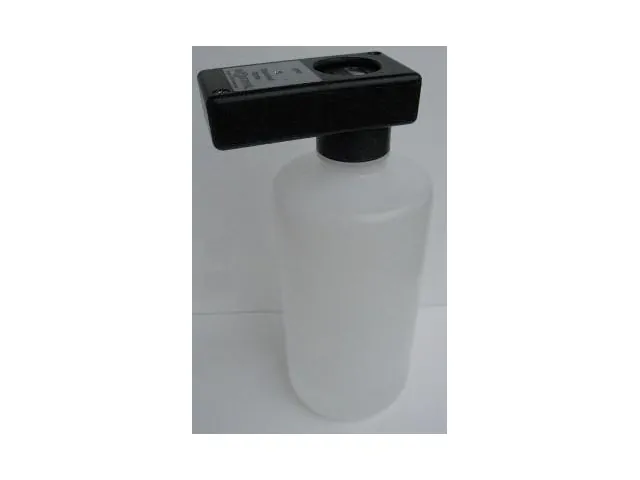 Dissolved ozone in waterDOZ30 ozone in water meter and Hanna HI38054 DPD test kit for treated water.
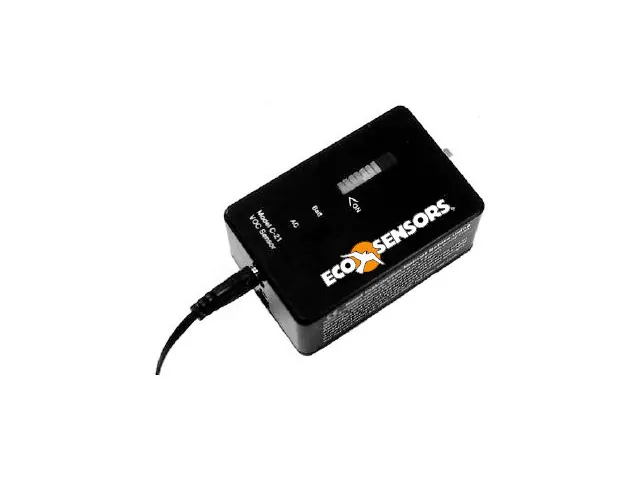 VOC gas sensorC-21 solvent vapour detector with bar graph, audible alarm and data logger output.
Handheld ozone monitor and VOC gas sensor
The EZ-1X and C-21 share the same compact 85 × 35 × 60 mm case and heated metal oxide sensor technology. Both run on a built-in rechargeable battery for walk-around checks, or on an AC adapter as a fixed monitor. The EZ-1X measures ozone; the C-21 measures VOCs.

Eco Sensors EZ-1X Ozone Monitor
Low-cost ozone safety monitor anyone can read
The EZ-1X is a pocket-sized ozone monitor for the air around ozone generators, purifiers and treatment systems. A heated metal oxide semiconductor (HMOS) sensor drives a colour bar graph that stays green in clean air, turns yellow at 0.05 ppm (caution) and red at 0.1 ppm (danger), so staff with no instrument training know at a glance when to ventilate or leave the room. Stand it on a bench or shelf on its AC adapter as a continuous monitor, or run it from the built-in rechargeable battery for walk-around leak checks.
Best when you need a simple, affordable way to confirm that the air people breathe stays below 0.1 ppm, the strictest South African workplace limit for ozone.
- Range0.02–0.14 ppm ozone in air
- DisplayBar graph: green normal, yellow 0.05 ppm, red 0.1 ppm
- SensorHMOS (heated metal oxide semiconductor)
- ResponseWithin tens of seconds of ozone reaching the sensor
- Power12–24 VDC, 300 mA (AC adapter)
- BatteryBuilt-in NiMH, about 8 hours; recharges overnight
- Size / weight85 × 35 × 60 mm / 154 g
In stock

Eco Sensors C-21 VOC Gas Sensor
Solvent vapour alarm in the same compact case
The C-21 is the only instrument on this page that does not measure ozone. It detects volatile organic compounds (VOCs) such as acetone, toluene, MEK and other solvent vapours, using the same HMOS sensor technology and compact case as the EZ-1X. The green, yellow and red bar graph shows rising concentration, an audible alarm sounds at the danger level, and connections are provided for an external alarm and a data logger. Use it on a wall in spray booths, print shops, laboratories and solvent stores, or unplug it to trace a leak.
Best when the hazard is solvent vapour rather than ozone, and you want an early warning before VOCs reach the levels set in the Hazardous Chemical Agents Regulations.
- DetectsSolvent vapours and most VOCs (not ozone)
- RangeFull scale 50–100 ppm for most solvent-based VOCs
- DisplayBar graph: green normal, yellow caution, red danger
- AlarmBuilt-in audible alarm, plus provision for external alarm and data logger
- SensorHMOS (heated metal oxide semiconductor)
- Power / battery12 VDC, 300 mA; NiCad or NiMH, about 2 hours
- Size / weight85 × 35 × 60 mm / 140 g
In stock
Ozone or VOCs? All instruments on this page measure ozone except the C-21, which detects volatile organic compounds such as solvent vapours. If you are unsure which gas you need to monitor, ask us before ordering.
Ozone analysers, monitors, controllers and water meters
From a reference-grade UV analyser to fixed alarms, generator controllers and dissolved ozone meters. Every card links to the product on the Ecotao store and to the category guide.

Eco Sensors UV-100 Ozone Analyzer
A UV photometric analyser that measures ozone in air by how much 254 nm ultraviolet light it absorbs, the reference method used for accurate ozone measurement. One instrument covers trace levels to high process concentrations, logs data, and is used to check the readings of other ozone monitors.
- Range0.01–999 ppm (0–1, 0–10, 0–999 ppm)
- Accuracy2%
- Outputs0–2.5 VDC, 4–20 mA, USB / serial
- Weight2.1 kg
In stock

Eco Sensors C-30ZX Ozone Monitor
A wall-mounted ozone alarm for rooms where people work near ozone. A colour bar graph turns yellow at 0.05 ppm and red at 0.1 ppm, and an audible alarm and relay contacts switch at 0.1 ppm. There are no controls for staff to adjust.
- Range0.02–0.14 ppm (display); 0.02–0.30 ppm (output)
- SensorHMOS
- AlarmBuzzer + relay at 0.1 ppm
- Output / power0–3 V / 12 VDC
In stock

Eco Sensors OS-4 Ozone Switch
An ozone controller that switches an ozone generator on and off to hold a cold store, room or HVAC system at a target concentration, with a separate 0.1 ppm safety alarm. It uses a remote, replaceable electrochemical sensor module.
- Range0.03–20 ppm
- SensorRemote electrochemical, T/RH compensated
- RelaysControl relay + 0.1 ppm safety relay
- Outputs0–2 V, 4–20 mA, RS-232
In stock

Eco Sensors OS-6 Ozone Controller & Monitor
A wash-down rated ozone controller for food processing, plant rooms and other wet locations. MAX and MIN set points run the generator, and a FAIL time raises an alarm if ozone stays outside the control band for too long.
- DisplayBacklit, auto-ranging 0–50 ppm
- SensorRemote electrochemical: 0–20 or 1–50 ppm
- EnclosureNEMA 4X polycarbonate
- Outputs0–2 V, 4–20 mA, RS-232
In stock

Eco Sensors SM-500 Electrochemical Ozone Sensor
A calibrated digital ozone sensor that connects to an OS-4 or OS-6 as the remote sensor, or reports ozone on its own to a PLC, building-management system or PC. It has little to no cross-sensitivity to VOCs.
- Range0–20 ppm or 1–50 ppm (choose when ordering)
- Detection / resolutionFrom 30 ppb / 5 ppb
- DataRS-232, USB
- Power5–30 VDC or USB
In stock

DOZ30 Ozone in Water Meter
A pen-type, reagent-free meter that reads dissolved ozone directly in the water sample with a tri-electrode sensor. Use it at the tap or tank, or fit it in a PVC flow fitting as an inline monitor.
- Range0–10.00 mg/L dissolved ozone
- Resolution / accuracy0.01 mg/L / ±2% of full scale
- Calibration2 points
- ProtectionIP67
In stock

Hanna HI38054 Water Ozone Test Kit
A DPD colorimetric test kit for ozone in water. Add one reagent packet and match the pink colour on the Checker disc. Use it as a stand-alone test, or as the reference for calibrating the DOZ30.
- Range0.0–2.3 mg/L
- Resolution0.1 mg/L
- MethodDPD colorimetric
- TestsApprox. 100 (refill HI38054-100)
Available on backorder
Ozone instrument comparison table
Compare measuring range, sensor type and main job across the range. Ranges for ozone in air are in ppm by volume; ranges for water are in mg/L.
← Scroll to see full table →
| Model | Measures | Range | Sensor / method | Main job | Format | Power |
|---|---|---|---|---|---|---|
| EZ-1X | Ozone in air | 0.02–0.14 ppm | HMOS | Safety monitor, bar graph (red at 0.1 ppm) | Handheld or fixed | Battery (about 8 h) or 12–24 VDC |
| C-21 | VOCs in air (not ozone) | Full scale 50–100 ppm (most solvent VOCs) | HMOS | Solvent vapour alarm | Handheld or fixed | Battery (about 2 h) or 12 VDC |
| UV-100 | Ozone in air | 0.01–999 ppm | UV photometric, 254 nm | Reference readings, data logging, checking other monitors | Portable / benchtop, 2.1 kg | 12 VDC |
| C-30ZX | Ozone in air | 0.02–0.14 ppm (display) | HMOS | Fixed safety alarm, buzzer + relay at 0.1 ppm | Wall mounted | 12 VDC |
| OS-4 | Ozone in air | 0.03–20 ppm | Electrochemical (remote) | Generator control + 0.1 ppm alarm | Wall mounted | 12–24 VDC |
| OS-6 | Ozone in air | 0–20 or 1–50 ppm (module) | Electrochemical (remote) | Industrial control with failure alarm | NEMA 4X, wall mounted | 12–24 VDC |
| SM-500 | Ozone in air | 0–20 or 1–50 ppm | Electrochemical | Digital sensor for OS-4 / OS-6, PLC or BMS | Sensor module | 5–30 VDC or USB |
| DOZ30 | Dissolved ozone in water | 0–10.00 mg/L | Tri-electrode electrochemical | Fast reagent-free checks, handheld or inline | Pen meter, IP67 | 1 × AAA |
| HI38054 | Dissolved ozone in water | 0.0–2.3 mg/L | DPD colorimetric | Chemical reference test and meter calibration | Test kit, about 100 tests | None needed |
Ozone sensor types explained: HMOS vs electrochemical vs UV
The sensing method decides how accurate, selective and long-lived an ozone instrument is. Most buyers choose between a low-cost alarm, a more selective controller sensor, and a reference analyser.
← Scroll to see full table →
| Method | How it works | Strengths | Limitations | Models |
|---|---|---|---|---|
| HMOS (heated metal oxide) | Ozone changes the electrical resistance of a heated oxide film | Low cost, fast, simple to read | Moderate accuracy; can respond to humidity changes and some VOCs | EZ-1X, C-30ZX (ozone); C-21 (VOCs) |
| Electrochemical | Ozone reacts at an electrode and produces a current | Selective, suits control loops and wide ranges | Drifts as the cell ages; needs periodic calibration and module replacement | OS-4, OS-6, SM-500 |
| UV photometric | Ozone absorbs 254 nm UV light; the absorption gives the concentration | Highest accuracy, low cross-sensitivity, no sensor consumption | Larger and more costly; needs warm-up time | UV-100 |
| Tri-electrode (water) | Electrochemical cell measures ozone dissolved in the sample | Reading in seconds, no reagents, can run inline | Needs calibration against a known reference | DOZ30 |
| DPD colorimetric (water) | Reagent turns the sample pink in proportion to ozone; matched on a colour disc | Direct chemical reference, traceable reagents | Manual, one sample at a time, consumes reagents | HI38054 |
How to choose an ozone sensor or instrument
Work through these questions in order. Most applications need one instrument for people's safety and, where ozone is dosed, one for the process.
- Is the ozone in air or in water?For air, choose from the EZ-1X, C-30ZX, OS-4, OS-6, SM-500 or UV-100. For dissolved ozone in water, choose the DOZ30 meter and the HI38054 test kit.
- Do you need an alarm, a number or control?An alarm that anyone can read: EZ-1X or C-30ZX. An accurate number: UV-100. Switching an ozone generator: OS-4 or OS-6.
- What concentration do you work at?Safety monitoring happens around 0.05–0.1 ppm. Treated rooms and cold stores can run far higher, so control needs the 0.03–20 ppm OS-4 or the up to 50 ppm OS-6. Process and lab work across a wide range suits the 0.01–999 ppm UV-100.
- Fixed or portable?The EZ-1X and C-21 work on battery for walk-around checks. The C-30ZX, OS-4 and OS-6 are wall mounted. The UV-100 moves between sites on a 12 V supply.
- Is the location wet or dusty?For wash-down areas in food processing and plant rooms, the OS-6 has a NEMA 4X enclosure. The DOZ30 is rated IP67.
- How will you prove the readings?Pair low-cost sensors with a reference. Use the UV-100 to check air monitors, and the HI38054 DPD kit to calibrate the DOZ30.
Ozone measurement applications
Water and wastewater treatment
The DOZ30 confirms residual dissolved ozone after the contact tank, the HI38054 provides the chemical reference, and an EZ-1X or C-30ZX near the generator warns operators of ozone escaping into the plant room.
Cold stores and fruit packhouses
An OS-4 or OS-6 switches the ozone generator to hold a set level in the store, while its 0.1 ppm safety relay protects staff entering the room.
Food and beverage processing
Where ozone sanitises surfaces, water or packaging, the wash-down rated OS-6 controls dosing and raises a failure alarm if ozone drifts out of the control band.
Room disinfection and HVAC
Ozone shock treatments and ozonated HVAC systems need a controller during treatment and a portable EZ-1X to confirm a room is safe to re-enter afterwards.
Laboratories and research
The UV-100 provides data-logged ozone readings from 0.01 to 999 ppm for experiments and process development, and serves as the reference to check other monitors.
Print shops, spray booths and solvent stores
The C-21 warns of solvent vapour build-up, while a C-30ZX warns of ozone in printer and copier rooms.
Ozone exposure limits in South Africa
The Regulations for Hazardous Chemical Agents, 2021 (under the Occupational Health and Safety Act) list ozone with an Occupational Exposure Limit – Maximum Limit that depends on workload:
Outdoors, South Africa's National Ambient Air Quality Standards set ozone at 120 µg/m³ (61 ppb) as an 8-hour running average. For comparison, the US OSHA permissible exposure limit is 0.1 ppm as an 8-hour average.
What this means for instrument choice: the EZ-1X, C-30ZX, OS-4 and OS-6 all signal danger at 0.1 ppm, matching the strictest SA workload limit. In a plant room on the Highveld or the coast, plan for summer heat and humidity: HMOS sensors respond to humidity changes, so a selective electrochemical or UV instrument is the better choice where readings must be precise. See the ozone monitor guide for more on SA limits.
Ozone sensors and instruments: frequently asked questions
What is an ozone sensor?
An ozone sensor is a device that detects ozone gas (O3) and converts its concentration into a reading, an alarm or an electrical signal. The three common types are heated metal oxide semiconductor (HMOS) sensors, which are low cost and used in simple monitors such as the EZ-1X and C-30ZX; electrochemical sensors, which are more selective and used in controllers such as the OS-4, OS-6 and SM-500; and UV photometric analysers such as the UV-100, which measure how much 254 nm ultraviolet light ozone absorbs and are the most accurate.
What is the difference between measuring ozone in air and ozone in water?
Ozone in air is measured as a gas concentration in parts per million (ppm) or parts per billion (ppb), mainly to protect people and to control ozone generators. Ozone in water is dissolved ozone, measured in mg/L (equal to ppm in water), to confirm that a treatment system leaves enough residual ozone to disinfect. They need different instruments: the EZ-1X, C-30ZX, OS-4, OS-6, SM-500 and UV-100 measure air, while the DOZ30 meter and HI38054 test kit measure water.
What is the safe level of ozone in a workplace in South Africa?
The Regulations for Hazardous Chemical Agents, 2021, under the Occupational Health and Safety Act, set ozone maximum limits that depend on workload: 0.1 ppm for heavy work, 0.16 ppm for moderate work and 0.2 ppm for light work, with 0.4 ppm for any workload when exposure is under 2 hours. The ozone monitors on this page alarm at 0.1 ppm, which matches the strictest of these limits.
Which ozone instrument do I need for an ozone generator room?
If you only need to warn staff of a leak, a fixed alarm such as the C-30ZX, or the EZ-1X on its AC adapter, is enough. If the ozone level in the room or cold store must be held at a set concentration, use a controller: the OS-4 for general rooms and HVAC, or the OS-6 for wet, wash-down areas. Add a UV-100 if you need accurate readings to set up the system or to check other monitors.
Can the EZ-1X measure ozone in water?
No. The EZ-1X measures ozone gas in air only. To measure dissolved ozone in water, use the DOZ30 ozone in water meter, and the Hanna HI38054 DPD test kit to calibrate and cross-check it. The EZ-1X is a useful companion beside water treatment equipment because ozone escaping from the water becomes an air hazard for operators.
Does the C-21 detect ozone?
No. The C-21 is a VOC gas sensor for solvent vapours such as acetone, toluene and MEK. It shares its compact case and HMOS sensor technology with the EZ-1X ozone monitor, which is why both are listed together, but it is set up to respond to volatile organic compounds, not ozone.
How accurate are low-cost ozone monitors compared with a UV analyser?
Low-cost HMOS monitors such as the EZ-1X and C-30ZX are designed as alarms: they show whether ozone is below, near or above a set level, and can be affected by humidity and some VOCs. Electrochemical sensors are more selective but drift as the cell ages. A UV photometric analyser such as the UV-100 has 2% accuracy and no sensor consumption, so it is used as the reference when accurate numbers matter.
Do you deliver ozone instruments outside South Africa?
Yes. Ecotao supplies ozone sensors and instruments from Cape Town across South Africa and to neighbouring countries including Namibia, Botswana, Zimbabwe, Mozambique, Lesotho and Eswatini. Contact sales@ecotao.co.za or +27 21 911 5835 for delivery options and lead times.
More ozone products
Not sure which ozone instrument you need?
Tell us whether you are measuring ozone in air or water, the concentration you work at and whether you need an alarm, a reading or generator control. We will recommend the right instrument and confirm stock and delivery across South Africa, Namibia, Botswana, Zimbabwe, Mozambique, Lesotho and Eswatini.
- Head office: +27 21 911 5835
- Zak: 086 142 8716
- Zaid: 082 390 3989
- sales@ecotao.co.za
- aqua@ecotao.co.za