
Thermometers for field, food, laboratory and industrial use
A thermometer is an instrument that measures temperature, either by direct contact with the material (liquid-in-glass, dial and probe thermometers) or remotely from the infrared energy a surface emits (infrared thermometers). The right type depends on whether you need a surface or internal temperature, a spot reading or the day's highest and lowest, and the temperature range you work in.
Ecotao supplies mercury-free glass thermometers, maximum-minimum thermometers, a soil thermometer, infrared thermometers and an oven thermometer from our Cape Town base, with delivery across South Africa and to Namibia, Botswana, Zimbabwe, Mozambique, Lesotho and Eswatini.
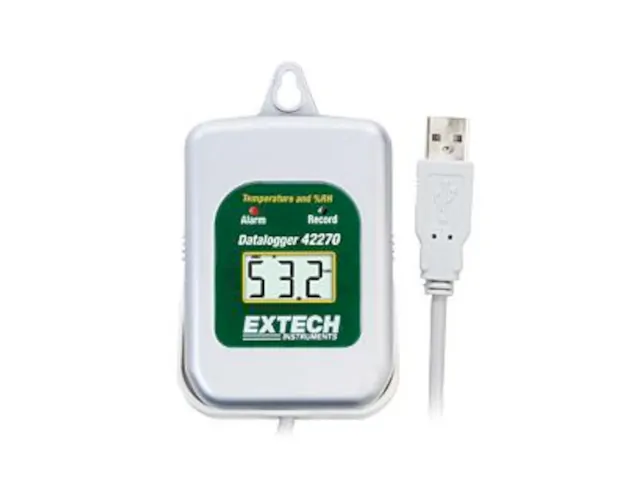
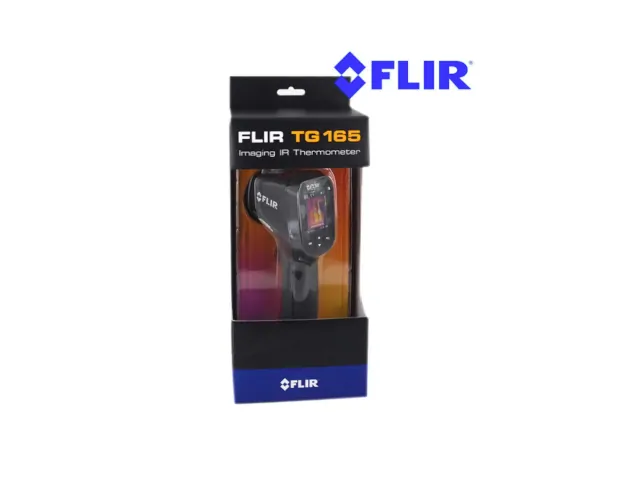
Need a record over time, humidity or a thermal image?
A thermometer gives you a reading at the moment you look at it. If you need temperature recorded automatically, humidity and dew point alongside it, or a full heat picture of a panel or building, these categories are a better fit:


Types of thermometer and how each one works
Each type of thermometer measures temperature in a different way. That determines what it can measure, how quickly it reads and where it can be used.
Liquid-in-glass thermometers
A liquid in a sealed glass tube expands as it warms and rises against a printed scale. They need no batteries and are simple to read.
Use them for liquids, air, water baths and general field checks. Mercury-free versions use a coloured organic or citrus-based liquid.
Dial (bimetal) thermometers
A coiled strip made from two metals that expand at different rates turns a pointer as the temperature changes. A long stem places the sensing coil deep in the material.
Use them for soil, ovens and grills, compost and anywhere a robust, battery-free gauge is needed.
Maximum-minimum thermometers
These record the highest and lowest temperature reached since the last reset, as well as the current temperature, using markers (glass and dial types) or memory (digital types).
Use them for greenhouses, tunnels, cold rooms, stores, weather stations and water tanks.
Infrared (non-contact) thermometers
A lens focuses the infrared energy emitted by a surface onto a detector, which converts it to a temperature. The reading takes about a second and nothing has to be touched.
Use them for hot, moving, live-electrical or hard-to-reach surfaces: motors, bearings, electrical panels, ducts, engines, road and roof surfaces.
Thermometers available from Ecotao
Specifications below are taken from the product listings. Where a product is on our online store, the Check stock button takes you straight to it. For the others, use Enquire and we will confirm availability and delivery.

6″ Enviro-Safe® Armor Case Pocket Thermometer
A tough, mercury-free pocket thermometer for fieldwork. The glass thermometer is filled with an environmentally safe, citrus-based liquid, so a breakage does not create a mercury spill. The stem and bulb are partly encased in aluminium for protection, and perforations around the bulb let air or liquid reach it directly for a true reading.
Best for: water and air temperature in the field, sampling teams, aquaculture ponds, school and university practicals, and anywhere a glass thermometer is likely to get knocked.
- TypeLiquid-in-glass, armoured case
- Length6″ (about 150 mm)
- FillCitrus-based, mercury-free
- Scale°C or °F versions
- Range & graduationsAsk Ecotao
- PowerNone required

6″ Enviro-Safe® “Easy Read” Armor Case Thermometer
A precision glass thermometer designed to be read quickly. The citrus-based, mercury-free liquid is set against a high-contrast back glass, and the thermometer sits in a protective plastic jacket with a viewing window and perforations so the bulb stays in contact with the sample. It is read vertically.
Best for: kitchens, food processing, laboratories and water baths where you need a clear reading at a glance without risk of mercury contamination.
- TypeLiquid-in-glass, plastic jacket
- Range (listed version)0 to 220 °F in 2° graduations
- Length6″ (about 150 mm)
- Colour optionsGreen liquid on white back glass, or black liquid on yellow back glass
- Celsius scaleAsk Ecotao
- PowerNone required

Digital Max/Min Thermometer
Shows the current temperature together with the highest and lowest values reached since the last reset, so you can see what happened overnight or while a store was closed. One button press clears the stored values. The weatherproof housing works indoors or outdoors, and a keyhole slot makes it easy to hang on a wall, post or inside a tunnel.
Best for: greenhouses and tunnels, cold rooms, storerooms, poultry houses, server cupboards and simple daily weather records.
- TypeDigital maximum-minimum
- DisplaysCurrent, maximum and minimum
- ResetPush-button
- HousingWeatherproof, indoor or outdoor
- MountingKeyhole slot
- Power2 × AAA batteries

Maxima-Minima Thermometer with Mercury
A robust glass maximum-minimum thermometer for recording the highest and lowest temperature in air or water between readings. It needs no batteries, which makes it a dependable choice for remote sites that are only visited every day or two.
Best for: air or water temperature extremes at remote sites, dams, tanks and outdoor enclosures where a battery-free instrument is preferred.
- TypeLiquid-in-glass maximum-minimum
- UseAir or water
- RangeAsk Ecotao
- PowerNone required
Contains mercury. If the glass breaks, do not touch the mercury or vacuum it up, and dispose of it as hazardous waste. For a mercury-free alternative, see the Digital Max/Min or Dial Min/Max thermometer.

Min/Max Dial Type Thermometer
A large, easy-to-read dial thermometer that registers the high and low temperatures as well as the current reading. The extremes are reset by hand, and the wide dial can be read from across a greenhouse or yard. No batteries are needed, and the range covers frost through to a hot summer's day.
Best for: greenhouses, nurseries, outdoor weather records, barns and sheds where frost and heat stress both need watching.
- TypeDial maximum-minimum
- Range-30 to 60 °C (-20 to 140 °F)
- Scales°C and °F
- ResetManual
- Size8″ × 9″ (about 200 × 230 mm)
- PowerNone required

Taylor® Soil Thermometer
A dial soil thermometer with a stainless steel stem that you push into the ground to read the temperature where seeds and roots actually are. The dual-scale dial shows both °C and °F. Soil temperature drives germination, root growth and fertiliser response, so it is a more useful planting guide than air temperature or the calendar.
Best for: deciding when to plant, checking seedbeds and tunnels, turf and sports-field management, compost monitoring and school agriculture projects.
- TypeDial (bimetal) stem thermometer
- Range0 to 80 °C / 20 to 180 °F
- Dial2½″ (about 64 mm)
- Stem4″ (100 mm) stainless steel
- PowerNone required

Compact Infrared Thermometer
A pen-sized, non-contact infrared thermometer in a metal alloy case that fits in a shirt pocket. Point it at a surface, press the button and read the temperature in °C or °F within a second. It switches itself off after 15 seconds to save the batteries and warns you when they run low. With a 1:1 distance-to-spot ratio it is made for close-up checks.
Best for: quick surface checks on food counters, fridges, pipes, HVAC vents and small components, held within a few centimetres of the target.
- Range-33 to 220 °C (-27 to 428 °F)
- Accuracy±2% of reading or ±2 °C
- Resolution0.1°
- Distance-to-spot1:1
- EmissivityFixed at 0.95
- Response time1 second
- Operating range0 to 50 °C
- Power2 × LR44 batteries
- Size3.25″ (about 83 mm) long

ST350 Infrared Thermometer
A non-contact infrared thermometer for safe temperature checks from a distance. A built-in laser shows where you are aiming, and the white backlit LCD stays readable in dim plant rooms. The reading holds automatically when you release the button, and the meter switches off 15 seconds later. Its 10:1 optics let you measure a 10 cm spot from 1 m away, so you can check hot or live equipment without getting close.
Best for: electrical panels and connections, motors and bearings, diesel engines and vehicles, plastics processing, fire and safety inspections, and food service.
- Range-25 to 400 °C (-13 to 752 °F)
- Accuracy±(2% + 1 °C)
- Resolution1 °C
- Distance-to-spot10:1
- Spectral response8 to 14 µm
- EmissivityFixed at 0.95
- Response time0.5 seconds
- Operating range0 to 40 °C, 10 to 80% RH
- Power1 × 9 V battery

Stainless Steel Oven & Grill Dial Thermometer (50 to 350 °C)
Oven dials and braai lids often read well away from the real temperature inside. This stainless steel dial thermometer sits in the oven, smoker or grill and shows the actual cooking temperature. The waterproof face does not fog up from the heat, so it can be read through the oven door or at a glance on the grill.
Best for: checking domestic and commercial ovens, braais, smokers and pizza ovens, and confirming that an oven thermostat is accurate.
- TypeDial (bimetal) oven thermometer
- Range50 to 350 °C
- MaterialStainless steel
- FaceWaterproof, anti-fog
- PowerNone required
Looking for something else? Our online store also lists digital probe thermometers, RTD thermometers, fridge and freezer thermometers with alarms and more infrared models: browse all thermometers in the Ecotao store or infrared thermometers only.
Thermometer comparison table
The table compares the thermometers on this page by measuring method, range and typical use.
← Scroll to see full table →
| Thermometer | Measures | Range | Records max/min | Power | Typical use |
|---|---|---|---|---|---|
| Enviro-Safe Armor Case Pocket | Contact (immersion / air) | Ask Ecotao | No | None | Field water and air checks |
| Enviro-Safe “Easy Read” | Contact (immersion / air) | 0 to 220 °F (listed version) | No | None | Food, lab, water baths |
| Digital Max/Min | Air | Ask Ecotao | Yes | 2 × AAA | Greenhouses, cold rooms, stores |
| Maxima-Minima (mercury) | Air or water | Ask Ecotao | Yes | None | Remote sites, tanks |
| Min/Max Dial | Air | -30 to 60 °C | Yes | None | Greenhouses, weather records |
| Taylor Soil | Contact (soil) | 0 to 80 °C | No | None | Planting, turf, compost |
| Compact Infrared | Non-contact surface | -33 to 220 °C | No | 2 × LR44 | Close-range surface checks |
| ST350 Infrared | Non-contact surface | -25 to 400 °C | No | 9 V | Electrical, mechanical, safety |
| Oven & Grill Dial | Air in oven / grill | 50 to 350 °C | No | None | Ovens, braais, smokers |
How to choose the right thermometer
Work through these five questions in order. Most applications are narrowed down to one or two types by question 2.
- Surface or inside?
If you need the temperature inside a liquid, soil, food or oven, choose a contact thermometer (glass, dial or stem). If you need a surface temperature, especially on something hot, moving or electrically live, choose an infrared thermometer.
- One reading or the extremes?
If you will be there to read it, any thermometer works. If you need to know how cold it got overnight or how hot a store became over the weekend, choose a maximum-minimum thermometer. If you need the full temperature history, choose a temperature data logger.
- What range do you need?
Pick a range that covers your coldest and hottest expected readings with some margin. Use -30 to 60 °C for outdoor air in Southern Africa, 0 to 80 °C for soil, 50 to 350 °C for ovens and up to 400 °C for engines and industrial surfaces.
- How far away will you be?
For infrared, check the distance-to-spot ratio. A 1:1 instrument must be held close. A 10:1 instrument reads a 10 cm spot from 1 m, which keeps you at a safe distance from live or hot equipment.
- Where will it be used?
For outdoor or wet sites, choose a weatherproof digital or a battery-free dial or glass type. Where breakage is a risk, such as in food areas, schools and field kits, choose an armoured or mercury-free thermometer.
Getting accurate readings from an infrared thermometer
Infrared thermometers are quick and convenient, but they measure differently from a probe. Most wrong readings come from one of these four causes:
- Spot size. The target must completely fill the measuring spot. With the ST350 (10:1), a 5 cm pipe needs you to be no more than about 50 cm away. With the Compact Infrared Thermometer (1:1), stay within about 5 cm.
- Shiny surfaces. Both infrared models on this page use a fixed emissivity of 0.95, which suits paint, plastic, rubber, food, wood and oxidised metal. Bare or polished metal reads low. Put matt black tape on it and measure the tape.
- Through glass or steam. Infrared does not see through glass, clear plastic, steam or dust. Measure the surface itself, not through a window or lid.
- Sudden temperature changes. Moving an instrument from an air-conditioned vehicle into a hot plant room can upset the reading. Let it settle for a few minutes in the new environment first.
Surface is not core. An infrared reading on food, soil or a liquid only tells you the surface temperature. Where internal temperature matters, as in food safety or soil at planting depth, confirm with a contact thermometer.
Thermometer applications in South Africa
Planting and crop production
Summer crops are sown on soil temperature, not on the calendar. Use the Taylor Soil Thermometer at planting depth in the early morning, when soil is coolest, over several days before committing seed. Highveld lands warm later in spring than coastal and lowveld soils, so readings matter most there.
Greenhouses, tunnels and frost
Winter frost on the Highveld, the Karoo and the Western Cape interior can damage seedlings in a single night, while tunnels can overheat on clear summer afternoons. A dial or digital max/min thermometer shows both extremes so you can adjust heating, shade netting and ventilation.
Food preparation and storage
The WHO's Five Keys to Safer Food advise keeping cooked food above 60 °C and cold food below 5 °C. Use a mercury-free glass thermometer or an infrared thermometer for quick checks on fridges and display units, and an oven thermometer to confirm that ovens actually reach their set temperature.
Electrical and mechanical maintenance
Loose connections, overloaded circuits and failing bearings run hotter than their neighbours. The ST350 checks breakers, cable lugs, motors and gearboxes from a safe distance during routine inspections. Compare similar components under similar load rather than relying on one absolute value.
Water, dams and aquaculture
Water temperature affects dissolved oxygen, fish feeding and growth, and treatment chemistry. An armoured pocket thermometer handles field sampling, and a maxima-minima thermometer left in a tank or dam records the day's range.
Education and training
Mercury-free glass thermometers are a safer choice for school and university practicals, and the dual-scale dials on the soil and min/max thermometers help learners convert between °C and °F.
Thermometer FAQ
What type of thermometer do I need?
Start with what you are measuring. For the temperature inside a liquid, soil or food, use a contact thermometer such as a glass, dial or probe thermometer. For hot, moving, live-electrical or out-of-reach surfaces, use an infrared (non-contact) thermometer. To know the hottest and coldest temperature reached while you were away, such as overnight in a greenhouse, cold room or water tank, use a maximum-minimum thermometer. For a continuous record over days or weeks, use a temperature data logger.
What is the difference between an infrared thermometer and a probe thermometer?
An infrared thermometer measures the infrared energy coming off a surface, so it reads surface temperature from a distance without touching anything. A probe or stem thermometer is inserted into the material and reads its internal temperature. Infrared is fast and safe for hot or live equipment, but it cannot see inside food, soil or liquids and it reads shiny metal surfaces inaccurately. Use a probe when the core temperature matters.
What does the distance-to-spot (D:S) ratio on an infrared thermometer mean?
The D:S ratio tells you how big an area the thermometer averages at a given distance. At 10:1, such as the ST350, the measured spot is about 10 cm wide when you stand 1 m away, or 1 cm wide at 10 cm. At 1:1, such as the Compact Infrared Thermometer, the spot is as wide as the distance, so it must be held close to the target. The target must completely fill the spot for an accurate reading.
Why does my infrared thermometer read low on shiny metal?
Both infrared thermometers on this page use a fixed emissivity of 0.95, which suits most painted, organic, plastic, rubber and oxidised surfaces. Polished or bare shiny metal emits much less infrared energy and reflects its surroundings, so the reading comes out too low. Put a piece of matt black tape or a spot of matt paint on the metal, let it reach the surface temperature, and measure the tape instead.
How does a maximum-minimum thermometer work?
A maximum-minimum thermometer keeps a record of the highest and lowest temperature since it was last reset, as well as the current temperature. Dial and glass types hold the extremes with markers that you reset by hand. Digital types store the values electronically and reset with a button. Read it and reset it at the same time each day to get a daily high and low.
How do I measure soil temperature for planting?
Push a soil thermometer such as the Taylor Soil Thermometer to planting depth in the morning, wait for the dial to settle and note the reading. Morning readings are the coolest of the day, so they give a conservative figure. Take readings over several days and at more than one spot in the land before deciding to plant. If the ground is hard, make a pilot hole first so the stem is not bent.
Are mercury-free thermometers as accurate as mercury thermometers?
For general field, food and laboratory work, a well-made mercury-free liquid-in-glass thermometer reads with comparable accuracy across its stated range. The Enviro-Safe thermometers on this page use a citrus-based liquid, so a broken thermometer does not create a mercury spill. Mercury thermometers need hazardous-waste handling if they break.
Do you deliver thermometers outside Cape Town?
Yes. Ecotao supplies from Cape Town to customers throughout South Africa and to Namibia, Botswana, Zimbabwe, Mozambique, Lesotho and Eswatini. Contact sales@ecotao.co.za or +27 21 911 5835 for stock and delivery.
Not sure which thermometer fits your job?
Tell us what you are measuring, the temperature range and where it will be used, and we will recommend a suitable thermometer, logger or thermal camera.
- Head Office: +27 21 911 5835
- Zak: 086 142 8716
- Zaid: 082 390 3989
- Email: sales@ecotao.co.za · aqua@ecotao.co.za