
Hanna Photometers and Checker HC Colorimeters
Photometry is how you measure what is dissolved in water rather than how the water behaves. A reagent reacts with the target substance to produce a colour, and the instrument measures how much light that colour absorbs. The result is a concentration in milligrams per litre rather than a shade matched against a printed chart.
Hanna builds this two ways. The Checker HC range puts one parameter in a pocket colorimeter at a fraction of laboratory cost. The portable photometers cover several parameters in one rugged instrument with onboard performance validation.
- Ammonia
- Free & total chlorine
- Iron
- Phosphorus
- Hardness
- Nitrate
- Reagents in stock
Colorimeter, Photometer or Test Kit
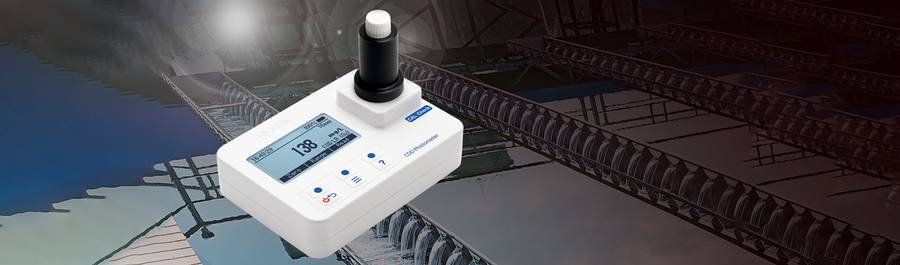 Hanna portable photometry in the field
All three work on the same chemistry. You add a reagent to a measured sample, the sample develops a colour, and the intensity of that colour tells you the concentration. What differs is how the colour is read.
A chemical test kit asks your eye to match the result against a colour card. That is fast and cheap, and for a go or no-go decision it is often enough, but two people will read the same tube differently and neither can resolve a fine gradation.
A Checker HC replaces your eye with an LED and a detector. It reads one parameter, costs a little more than a test kit, and returns a number you can log, trend and defend. For most users this is the sweet spot.
A portable photometer does the same across many parameters at once, in a waterproof housing, usually with CAL Check performance validation so you can prove the instrument is reading correctly before you trust the result. This is what you buy when the readings leave your premises in a report.
The Models Worth Starting With
Ecotao stocks around thirty Hanna photometry products once reagents and calibration sets are counted. The instruments below are the ones South African customers ask for most often, across aquaculture, water treatment, agriculture and pool work.
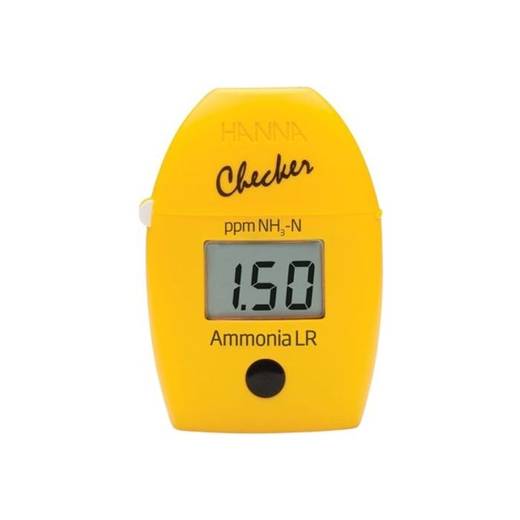
Ammonia Checker HC
Ammonia is the parameter that kills fish and trips wastewater compliance, and it is the single most requested Checker in the range. Available in three ranges so you can match the instrument to the water rather than compromise on resolution.
- Low range HI700 for aquaria and clean water
- Medium range HI715 for general use
- High range HI733 for wastewater and aquaculture
- Reads in mg/L as ammonia nitrogen
- Pocket colorimeter, reagent supplied separately
Best for: aquaculture, aquaria, wastewater monitoring and borehole screening.
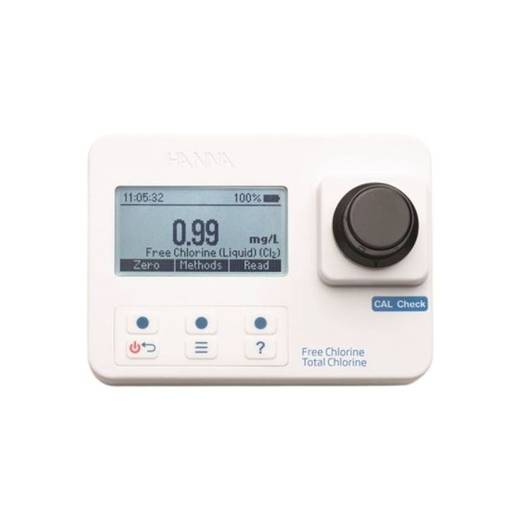
Free and Total Chlorine Portable Photometer with CAL Check
Chlorine is the most measured parameter in South African water, and this is the instrument that does it properly. Reads free and total chlorine, which together tell you whether your disinfection is working and how much has already been consumed.
- Free and total chlorine
- CAL Check performance validation
- Waterproof portable housing
- Supplied as a kit with reagents
- Results in mg/L
Best for: municipal supply, reticulation, bottling and anyone reporting chlorine residual.
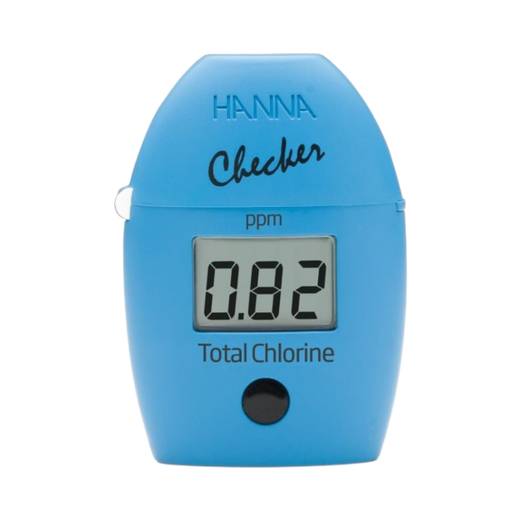
Total Chlorine Checker HC
The pocket route to total chlorine. Where the portable photometer is more instrument than the job needs, the Checker gives the same chemistry and a real number at a fraction of the outlay.
- Total chlorine in mg/L
- Pocket colorimeter format
- Reagent sachets, 25 tests per pack
- Calibration check set available
- Single parameter
Best for: pools, small water schemes and routine residual checks.
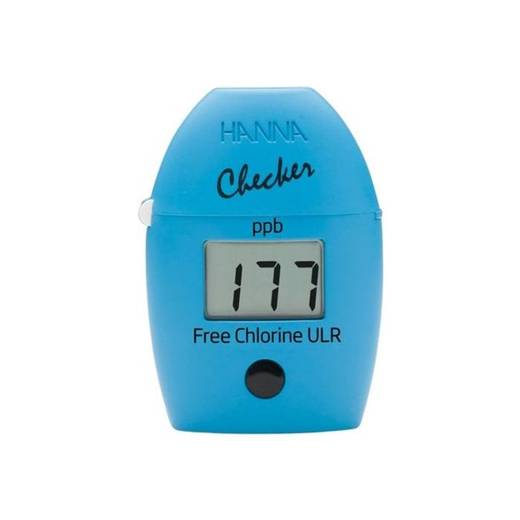
Free Chlorine Ultra Low-Range Checker HC
Built for the bottom of the scale, where ordinary chlorine methods simply report zero. If you are polishing water or controlling a very light residual, the ultra low range is the only way to see what is actually there.
- Ultra low range free chlorine
- Resolves residuals ordinary methods miss
- Pocket colorimeter format
- Reagents and check set available separately
- Results in mg/L
Best for: bottling, food processing and polished or RO treated water.
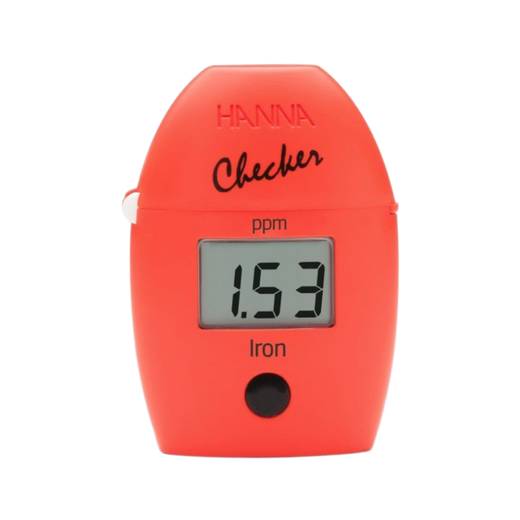
Iron Checker HC
Borehole water in much of South Africa carries iron, and iron is what stains laundry, fouls irrigation emitters and blocks filters. This reads it directly rather than leaving you to guess from the colour of the staining.
- Iron in mg/L
- Pocket colorimeter format
- Reagent sachets supplied separately
- Calibration check set available
- Single parameter
Best for: boreholes, irrigation systems and filtration sizing.
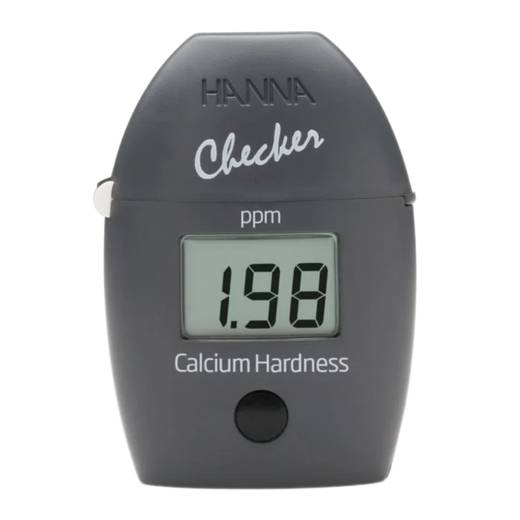
Calcium Hardness Checker HC
Calcium hardness drives scale in boilers and heat exchangers, plaster damage in pools and shell formation in aquaculture. All three are expensive problems caught cheaply.
- Calcium hardness in mg/L
- Pocket colorimeter format
- Reagents available in 25 test packs
- Calibration check set available
- Single parameter
Best for: pools, boilers, cooling water and shellfish aquaculture.
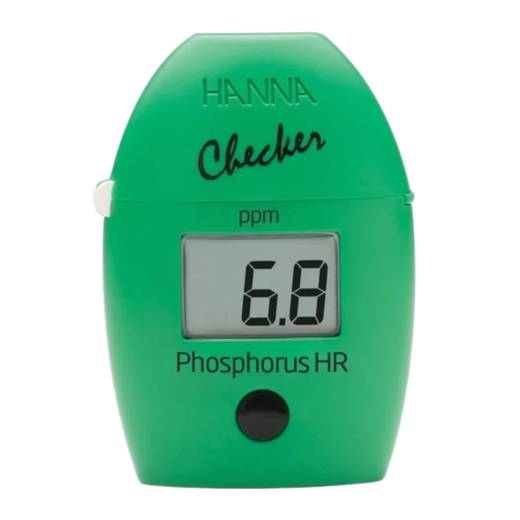
Phosphorus High-Range Checker HC
Phosphorus is the nutrient that drives algal blooms, and it is increasingly the one regulators ask about. The high range version suits effluent and fertiliser affected water rather than clean surface water.
- High range phosphorus
- Pocket colorimeter format
- Reagent sachets supplied separately
- Results in mg/L
- Single parameter
Best for: wastewater, agricultural runoff and dam monitoring.
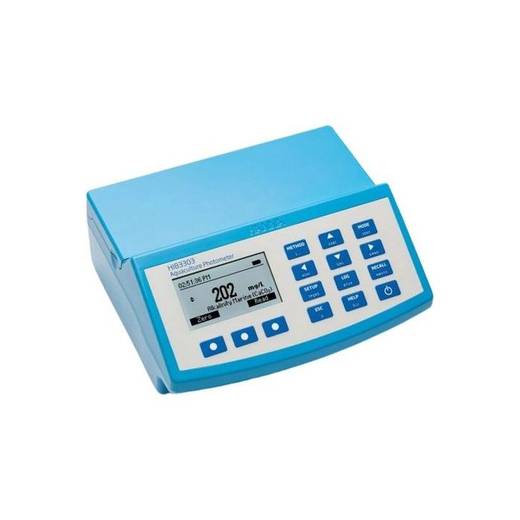
Aquaculture Photometer
A multiparameter benchtop photometer configured around fish and shellfish production, covering the parameters that determine whether stock thrives or dies. One instrument instead of a shelf of single parameter Checkers.
- Multiple aquaculture parameters in one instrument
- Covers nitrogen compounds, hardness and more
- Benchtop format
- Designed for production monitoring
- Reagents available per parameter
Best for: commercial fish and shellfish farms running a daily monitoring schedule.
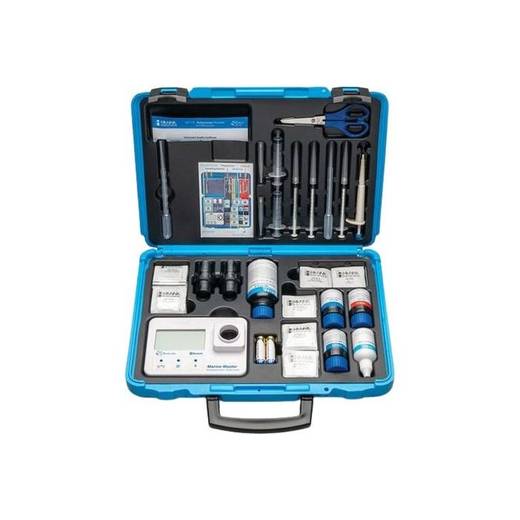
Marine Master Waterproof Wireless Multiparameter Photometer
The marine and reef equivalent, waterproof and wireless, covering the chemistry that reef systems live or die by. Results move to a phone or tablet rather than a notebook.
- Multiparameter marine chemistry
- Waterproof housing
- Wireless result transfer
- Portable format
- Reagents available per parameter
Best for: marine aquaria, reef systems and marine research.
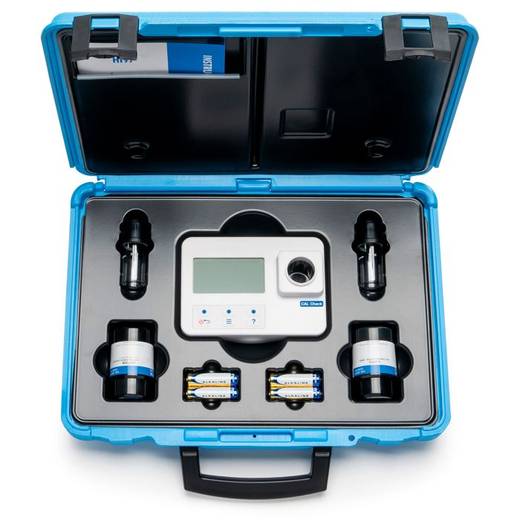
Low-Range Portable Photometer Kit: pH, Chlorine, Hardness and Iron
Four parameters that between them describe most small water supplies: pH, free and total chlorine, total hardness and iron. Supplied as a kit, which makes it the practical starting point if you are equipping a site rather than buying for one test.
- pH, free and total chlorine
- Total hardness and iron
- Portable photometer kit
- Supplied with starter reagents
- Results in mg/L
Best for: small water schemes, lodges, farms and facilities teams.
Nitrate Portable Photometer Kit with CAL Check
Nitrate is the agricultural parameter that matters most, both as a fertiliser input you have paid for and as a contaminant that ends up in groundwater. CAL Check lets you prove the reading before you act on it.
- Nitrate in mg/L
- CAL Check performance validation
- Portable kit with reagents
- Waterproof housing
- Suited to field use
Best for: irrigation water, groundwater monitoring and fertiliser management.
Checker HC, Portable Photometer or Test Kit
The same chemistry, read three different ways. This is the decision most customers are actually making.
| Chemical test kit | Checker HC | Portable photometer | |
|---|---|---|---|
| Reads the colour | Your eye, against a card | LED and detector | LED and detector |
| Result | A band or range | A number in mg/L | A number in mg/L |
| Parameters | One per kit | One per Checker | Several per instrument |
| Validation | None | Calibration check set | Onboard CAL Check |
| Repeatable between operators | No | Yes | Yes |
| Suits reporting | Not really | Usually | Yes |
| Relative cost | Lowest | Low | Highest |
Where Photometry Gets Used
Anywhere a concentration has to be known rather than estimated.
How to Choose
-
Name the parameter, then the range
Ammonia alone comes in three ranges. Picking the wrong one means either a reading that pegs at the top of the scale or one with no useful resolution. Tell us the concentrations you expect and we will match the range.
-
Decide whether one parameter is enough
If you only ever test chlorine, a Checker is the sensible buy. Once you are testing three or four parameters regularly, a portable photometer usually costs less than the equivalent Checkers and is easier to carry.
-
Ask whether the number leaves your site
For internal control, a Checker is fine. If results go into a compliance report or to a customer, choose an instrument with CAL Check so you can demonstrate it was reading correctly.
-
Work out your reagent consumption
Reagent packs are typically 25 tests. Daily testing on one parameter is roughly a pack a month. This is the real running cost and it is worth calculating before you choose.
-
Order the calibration check set with the instrument
A Checker with a check set can be verified against a known standard. Without one, a drifting instrument looks exactly like changing water.
Reagents and Calibration Check Sets
Every instrument on this page is useless without reagents. They are not an optional extra and they do not last indefinitely. Ecotao stocks the reagent packs for the full Checker HC range, typically in 25 test sachets, along with the calibration check sets.
Reagents have an expiry date and the chemistry genuinely degrades. Out of date reagent is one of the most common causes of a reading that drifts low for no apparent reason. Order what you will use in a reasonable period rather than stockpiling.
A calibration check set contains a standard of known concentration. Measuring it tells you in one minute whether the instrument is still reading true, which converts an instrument you hope is right into one you know is right. For anyone whose results are reported externally, this is not optional.
We hold reagents and check sets for the ammonia, free and total chlorine, iron and calcium hardness Checkers. Tell us the model number and we will quote the matching consumables rather than leaving you to match part numbers.
Frequently Asked Questions
A Checker HC is a pocket colorimeter that measures one parameter. It is inexpensive, simple and returns a number in milligrams per litre rather than a colour match. A portable photometer measures several parameters in one waterproof instrument and usually includes CAL Check, an onboard routine that verifies the instrument against a known standard. Choose a Checker when you test one thing routinely and the result stays in house. Choose a portable photometer when you test several parameters, work in the field, or have to demonstrate that the instrument was reading correctly.
Yes, and they are not optional. Photometry works by reacting the sample with a reagent to develop a colour, so no reagent means no reading. Hanna supplies them as sachets, typically 25 tests per pack. They carry an expiry date and the chemistry degrades over time, particularly once a pack is opened or stored warm. Reagent past its date is one of the most common reasons an instrument appears to drift. Order quantities you will use within a sensible period rather than buying a year ahead.
CAL Check validates the instrument's optical performance against a standard of known value. You run the standard, the photometer reports whether it reads it correctly, and you then know the instrument itself is not the source of an unexpected result. It is the difference between believing your reading and being able to show it was correct. On Checker HC models the same function is served by a separate calibration check set.
That depends on the water. Low range HI700 suits aquaria, drinking water and other clean water where ammonia should be near zero and you need to resolve small amounts. Medium range HI715 covers general purpose work. High range HI733 suits wastewater, intensive aquaculture and anywhere concentrations are high enough that a low range instrument would simply peg at the top of its scale. If you are unsure, tell us the water and the concentrations you expect and we will match the range.
For routine monitoring, usually yes, and that is the point. A photometer gives you a result in minutes at the sample point instead of days later, which means you can act on it. What it does not replace is accredited analysis. If a result has to stand up legally, support a water use licence or be defended to a regulator, you still need an accredited laboratory. The practical pattern most customers settle into is frequent in-house photometry for control, with periodic laboratory analysis for verification.
Yes. We stock the reagent packs and calibration check sets for the ammonia, free and total chlorine, iron and calcium hardness Checker HC range, and can order reagents for the other parameters. These are the items customers reorder rather than the instruments, so it is worth setting up a standing order if you test on a schedule. Give us the model number of your instrument and we will quote the correct consumables for it.
Related Pages
Not sure which parameter or range you need?
Tell us what you are testing, roughly what concentrations you expect and whether the results are reported externally. We will match the instrument to the range and quote the reagents to go with it.